Blog
.jpg)
Christmas without snow: Connecting with the Latin Spirit
Every year, brands roll out their Christmas campaigns. But while the Northern Hemisphere celebrates snow, fireplaces and hot drinks, in most of
LATAM, December means summer, music and family gatherings.
The result: many so-called universal creative codes end up feeling out of sync with Latin American reality — and out of context.
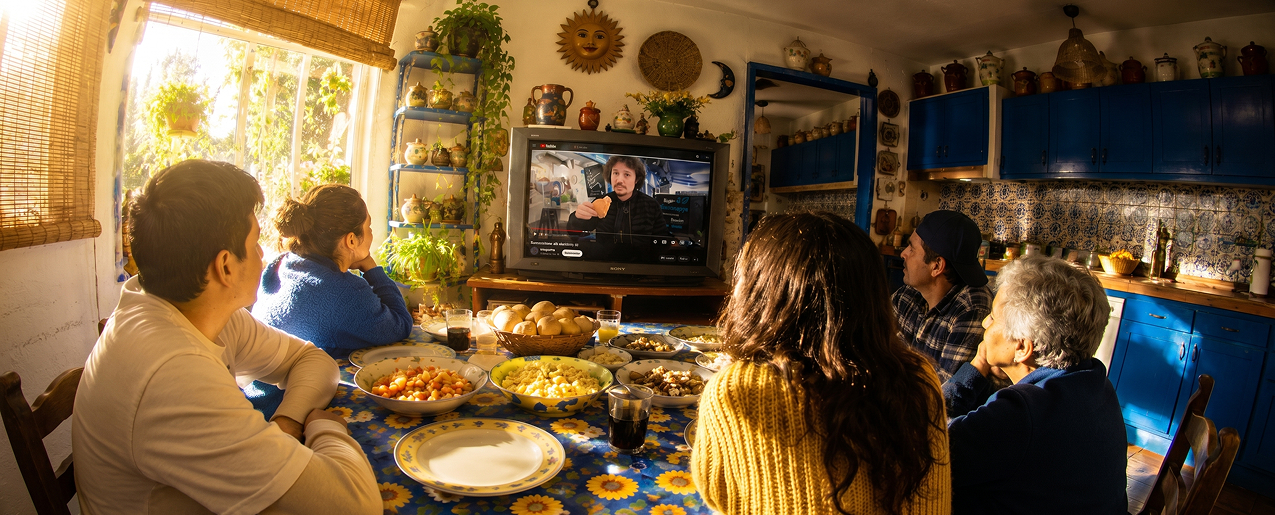
So why not tell the stories that really happen here? Long family tables, secret-Santa exchanges, or the big Christmas dinner. When the story starts
there, it feels genuine and unmistakably Latin.
Global campaigns don’t always translate well.
Many brands thrive in their home markets, but when the same idea lands in LATAM, something gets lost.
The ad looks festive, but it doesn’t connect.
What usually goes wrong?
- Winter codes: snow, sweaters and hot chocolate, right in the middle of summer.
- Neutral casts and accents that don’t sound like the people from the region.
- Slow-paced music, when here the celebration is loud, joyful and shared.
- Moments that don’t fit. Christmas is celebrated on the night of the 24th, not the morning of the 25th.
- Imported decorations that cover up local flavors, colors and traditions.
.png)
So, what does Christmas in LATAM really look like?
From the moment December begins, offices, schools and groups of friends play “amigo secreto”, where small gifts are exchanged until the final reveal. In Mexico, “Posadas” kick off with piñatas and ponche, while in Colombia, the “Novena de Aguinaldos” brings together families and neighbors.
Cities light up with decorations and Christmas fairs. There are last-minute shopping sprees and carols all month long, especially in Peru, where Los Toribianitos and their classic “Cholito Jesús” fill the air.
On Christmas Eve, Latin Americans dress up in their best clothes, Christmas in pajamas isn’t really a thing here. Families gather to enjoy the big Christmas dinner, filled with turkey, pork, tamales, hallacas, salads, desserts and, of course, the beloved panetón.
At midnight, baby Jesus is placed in the nativity scene, people raise a toast, fireworks light up the sky and gifts are opened. The celebration doesn’t end there, the music keeps playing, and families stay up late talking, laughing and sharing one more drink.
Christmas in LATAM is a celebration that’s lived and shared together.
.png)
What can global brands learn?
Map local traditions: Choose a real moment like amigo secreto or Christmas Eve and tell that story in full.
Local voices and faces: Use words, accents and people that reflect each country and city’s diversity.
A clear product role: Show how your brand makes that moment better—by helping prepare dinner, arrive on time or set up the perfect playlist.
Global and local symbols: Christmas trees and lights, yes—but mix them with long family tables, local carols, traditional dishes and subtle regional details.
Useful content: Quick recipes, country-specific playlists, gift guides or toast ideas.
And the numbers back it up: in LATAM, 62% of brand choices are local or regional, according to The Brand Footprint 2024 report.
In such a diverse region, real connection with consumers starts by recognizing their identity, their environment and their way of celebrating.
Cases and learnings
Panetón D’Onofrio (Peru)
Every year, the brand returns to the same idea: Christmas in Peru feels like home — surrounded by people and a panetón at the center of the table. Simple stories, local cast and real traditions.D’Onofrio shows that when a scene feels familiar, you don’t need big plot twists — it’s enough to tell it as it really happens.
.png)
Claro (Colombia)
The telecom brand created a digital version of “La Novena de Aguinaldos” for people to download and share, bringing one of December’s most beloved rituals online and making it accessible to everyone.
Claro shows that you can take an existing tradition and turn it into something useful for your audience. This way, the brand stays present right where people already are, in their customs and in their everyday lives.

Harina P.A.N. (Venezuela)
The brand celebrates hallacas, a centerpiece of the season, by launching a special holiday packaging that reflects the spirit of Venezuelan festivities. It also joins the celebration by including the product in “combos hallaqueros” and sponsoring the “Festival de la Hallaca”.
Harina P.A.N. shows the power of embracing a cultural ritual that drives purchase behavior, like making hallacas, to earn a place at the table.

Pollo Campero (Guatemala)
The brand hosts a massive year-end event featuring fireworks and drone shows that bring families together and mark the start of the Christmas season.
Pollo Campero shows that by connecting with a tradition that brings people together, a brand can become the true host of the celebration.

Conclusion: Understanding the region is the best strategy
Winning Christmas in LATAM isn’t about changing the decorations, it’s about reading December’s emotional calendar, choosing the moments that truly represent the region, and offering simple solutions that make what already happens at home even easier.
In a region where 62% of brand choices are local or regional, the campaigns that truly resonate are the ones that understand the tone, timing and symbols of each country.
When a brand adapts to the local context, it earns a place in group chats, at the dinner table and in people’s memories, leaving them with the feeling that the brand speaks their language.
If your brand wants to speak that language with a local accent, Positive Agency is here to help.
We adapt global messages to the LATAM context and turn them into stories that connect and get shared.
Want your campaigns to sound more local and perform better? Get in touch. We’re the partner that speaks LATAM’s cultural language.

Micro-influencers: A key driver of marketing in LatAm
Why Microinfluencers?
You don’t need a million followers to connect with a million people.
Today, brands without massive influencer budgets are discovering the power of microinfluencers—content creatorswith smaller but highly engaged audiences. Microinfluencers tend to generate significantly higher engagement thanlarge-scale profiles. Recent studies show that microinfluencers (typically between 1,000 and 100,000 followers) canachieve average engagement rates close to 7%. That’s up to 60% more engagement than larger influencers, thanks tothe trust and closeness they maintain with their audience. A well-executed campaign with a 100K-follower profile canyield better results than a million-dollar investment focused on reach without genuine connection.
In countries like Peru, Mexico, Guatemala, and Ecuador, brands are earning public trust by betting on authentic contentand real voices. In an era where audiences skip traditional ads and seek honest relationships with brands,microinfluencers are rewriting the marketing rulebook. Brands that understand this shift are achieving what manyconsider the digital “holy grail”: staying relevant, converting without being pushy, and building community throughcloseness.
In a landscape saturated with ads and messages, microinfluencers have become the most trusted and relatable voices.With communities ranging from 1,000 to just over 100,000 followers, they strike a powerful balance: enough reach tocreate impact, and deep, authentic connection with their followers.
Unlike big-name celebrities, their content doesn’t feel like a paid spot—it feels like a genuine recommendation. They’resubject-matter experts, they chat with their followers, and they share from lived experience, making their posts feel liketrusted advice from a friend. Partnering with microinfluencers allows brands to integrate naturally into people’s lives,from within communities, with content that inspires trust, affinity, and relatability.
Now, let’s look at how this formula is already producing real results in countries like Peru, Mexico, Ecuador, and Guatemala.
Peru: Relatability and Credibility in Every day Life
In Peru, microinfluencers have proven that authenticity beats perfection.
The content that truly performs is the kind that feels real—unfiltered, unscripted, and born from everyday moments the audience can relate to. Brands that understand this have created memorable campaigns by embracing the simple but powerful.
Take creators like Christydinatali, Chocochifle.show, and Alisson.gonzaleezz, who use ironic humor and an unmistakable personal style to deliver sharp, no-frills perspectives. Without big production budgets, they responded authentically and personally to campaigns like Burger King’s “Los chanchos vuelan,” where the brand introduced its new Bondiola King sandwich via drone delivery. The result: real comments and high engagement. No celebrities—just microinfluencers sharing their love for pork and the grill.
Another standout case was the “Winter Season” campaign by Tottus. Instead of traditional models, the brand chose microinfluencers to showcase its new clothing line. The content felt so real and accessible that it went viral organically, sparking a wave of user-generated videos proudly showing off their outfits. The impact extended beyond engagement—it translated into sales.
.png)
In fact, in the first quarter of 2025, an influencer marketing platform connected 716 microinfluencers with various brands, generating over 342 million impressions, 34 million likes, and 459,000 shares. Brands like Tottus, BCP, and Kotex saw notable gains in visibility, traffic, and digital conversion thanks to these collaborations.
Key insight: In Peru, authenticity drives real connection. When brands embrace unfiltered content and work with microinfluencers, they don’t just reach people—they earn their trust. What’s everyday, spontaneous, and genuine stays longer in people’s minds—and hearts. Because here, what’s produced might catch attention, but what’s real stirs emotion. And that emotion is what converts.
Mexico: Storytelling withHeart and a Senseof Belonging
In Mexico, we’ve noticed a clear pattern among successful microinfluencers: they know how to tell soulful stories.
The content that truly resonates blends relatability, humor, and deep cultural belonging. And if there’s something that captivates Latin American audiences, it’s a well-told anecdote—those everyday tales that don’t seem like branded content but, in the right hands, seamlessly incorporate products without feeling forced.
A standout example is Carlos Zacu, a rising microinfluencer who has won over thousands with his raw, humorous storytelling. He draws from personal experiences, difficult moments, and relatable anecdotes. He’s not afraid to laugh at himself or move his audience with vulnerable truths. Thanks to his authenticity, brands like CeraVe, Garnier
México, Dove Men, and LaLiga have trusted him to reach new audiences. His work isn’t just content—it’s community built from the heart.
.png)
In recent events like the 2024 Copa América and Latin Grammys, TelevisaUnivision activated 16 influencers—mostly microinfluencers—for campaigns that reached 41.6 million video views and 3 million interactions, delivering an estimated ROI of 4 to 1 and an average cost of just $0.0045 per view.
Key insight: In Mexico, emotional storytelling rooted in local identity and humor is the strongest bridge between brand and audience. It’s not just about telling a story—it’s about telling it like a friend would: with warmth, wit, and honesty. When content feels familiar and part of daily life, the connection isn’t just made—it becomes unforgettable.microinfluencers, they don’t just reach people—they earn their trust. What’s everyday, spontaneous, and genuine stays longer in people’s minds—and hearts. Because here, what’s produced might catch attention, but what’s real stirs emotion. And that emotion is what converts.
Guatemala: Local Culture and Genuine Connection
In Guatemala, we’ve found a diverse community of microinfluencers who stand out for their authentic, relatablecontent with deep local roots.
What really connects here is what feels real—from home-cooked traditional recipes to honest stories of entrepreneurship, told without filters or frills.
Guatemalan microcreators understand that the real value lies in showing life as it is—and that’s what makes theirimpact so powerful. A prime example is Pao Sánchez, who’s built a solid Latin American audience thanks to hergenuine, spontaneous lifestyle. It’s exactly this real-life content—based on daily routines, relatable tone, and livedexperience—that’s attracted brands like Banco Cuscatlán, Remington, Pandora, and Warner Bros, who recognize herability to naturally weave products into content that truly resonates.
.png)
Another local success story involved an organic beverage brand that entered Guatemala, El Salvador, and Costa Ricathrough 150+ microcreators, generating over 350 unpaid Instagram posts and securing shelf space and productturnover with zero paid advertising.
Key insight: In Guatemala, authenticity isn’t a strategy—it’s a way of telling life. The content that resonates doesn’ttry to impress—it aims to connect. And when a story feels honest, it becomes a conversation.
Ecuador: Everyday Humorand Local Pride
In Ecuador, microinfluencers have tapped into a key truth: localinsights are gold. The moments we all live—but few know how to narrate—are the ones that build real connection.
In such a diverse country, the content that sticks is the kind that mixes authenticity, humor, and everyday life.These creators don’t need big productions. With a phone and a lot of truth, they make us laugh, reflect, and share.They use the language of the streets, the family, and the neighborhood to tell stories everyone recognizes.
One great example is Josh Paredes, a rising microinfluencer who’s built a strong community using short scripts andeveryday Ecuadorian and Latin American scenarios. Thanks to this organic and relatable approach, brands like KFC,DFSK (auto), Etafashion (retail), and Supermercados Akí now rely on her content to connect authentically.
.png)
Key insight: In Ecuador, the most impactful content is the kind that feels like it was made by “one of us.” The morereal, the stronger the bond—because here, trust isn’t earned with production value, it’s earned with truth.
In Ecuador, microinfluencers with 5,000 to 20,000 followers average about 1.28% engagement on Instagram, whilethose with 1,000 to 5,000 can reach around 3.5%. The smaller the audience, the greater the interaction rate—proving once again that authenticity outperforms scale.
Thinking of Collaborating with Microinfluencers?
Start by observing and listening: identify those already speaking about your brand organically and analyze what kind ofcontent truly connects with their communities. It’s not about big numbers—it’s about strong affinities. Then, define thevalues, emotions, and messages you want to convey, and partner with microinfluencers who reflect that same essence.
The secret is to build genuine relationships—not impose scripts. Be clear about your goals, but leave space for thecreator to bring their voice, style, and authenticity. Think of them as creative partners, not just advertising channels.And above all, amplify their content on your platforms—doing so gives them visibility, strengthens the bond, andshows your community they’re an active part of your brand’s story.
Remember: 44% of marketers already prefer working with microinfluencers because of their high engagement and costefficiency.
Why Latin America Isthe Ideal Groundfor MicroinfluencerDriven Brands
Latin America isn’t just a market—it’s a diverse, passionate, and connection-driven community. Here, microinfluencers aren’t just messengers—they’repart of the neighborhood, part of the daily conversation.
Their authenticity, relatability, and recommendation power make them essential allies for brands looking to go beyondtraditional advertising. In fact, a Nielsen study found that 92% of consumers trust recommendations from individualsmore than from brands themselves.
At Positive Agency, we understand that every country has its own codes, language, and cultural references. That’s whywe don’t offer a one-size-fits-all formula—we bring the cultural sensitivity needed to truly connect.
If you’re ready to speak to real audiences through authentic voices, we’re ready to build it with you. Let’s bring thatstory to life.

Fandom in Peru and its connection potential
We were walking around Lima recently and paused in front of an ad at Arenales Shopping Center. For those who don’t know it, it’s the largest epicenter of otaku, gamer, and geek culture in Peru, popular among lovers of anime, manga, video games, Kpop, and Asian culture in general. There, we saw an Inca Kola ad—not about food this time, but about cosplay, manga, video games, pop culture—featuring fans like us not as consumers, but as protagonists. And that’s when we realized: brands that understand the power of fandom in Latin America don’t just sell… they become part of something much bigger.
What do brands have to do with all of this?
More and more, brands understand that it’s not enough to talk to people; you have to connect with what they love. That’s where fandom comes in. Today, brands like Inca Kola, Pilsen Callao, Coca‑Cola, and many others are finding authentic ways to dive into these worlds
- Inca Kola left an indelible mark at Arenales by connecting directly with otaku and gamer communities. Through visual campaigns featuring anime, video games, and local culture, the brand renewed its big idea—“da gusto con todo”—to connect with new generations without losing its essence. It began with strategic activations alongside a Z‑audience influencer, adapting their core message for a new crowd. Inca Kola went beyond ads: it became a cultural integration symbol—appearing on collectible cards, manga‑style illustrations, and in‑mall activations—naturally joining the fandom world. The brand learned that “gusto” isn’t just a flavor; it’s a shared emotion experienced in skate, cosplay, urban dance—everything that drives this community

- Pilsen Callao, one of Peru’s most popular beers, found its place in the gaming world by aligning with its core value: friendship. Rather than just sponsoring events, it created experiences celebrating gaming among friends. It appeared at Gamer Day events, supporting Dota communities—one of the most popular games in the region. Its commitment went further—partnering with developers and AI tech to create inclusive solutions so everyone, regardless of ability, can enjoy gaming. For them, the real victory is ensuring no one is left out, and that every friendship, without exception, has a place in this universe.
.png)
Coca‑Cola knows how to connect fandom power with its timeless taste. In Peru, the Marvel universe beats in the hearts of over 1.3 million fans. From comics to collectibles to movie marathons, the Peruvian Marvel community is huge and passionate. Coca‑Cola recognized this and, ahead of the biggest 2024 premiere—Deadpool & Wolverine—launched a special edition in partnership with Marvel. Superhero-themed cans and bottles hit stores, supermarkets, and cinemas nationwide, awakening the collector spirit in thousands of Peruvians. When a brand understands what excites its audience, it stops being part of their daily life and becomes part of their world. Coca‑Cola didn’t just refresh fans—it made them feel seen. And in a country where Marvel is almost like a religion, that’s worth more than a thousand epic battles.

What do brands have to do with all of this?
Today, the difference between a brand that simply shows up and one that truly connects lies in understanding the terrain it steps onto. Being present isn’t enough—you have to know how to be present. It’s not about intruding; it’s about integrating
The spaces where people express themselves, share, and build identity are not showcases— they’re cultural ecosystems, where language, codes, and dynamics matter.
Where being an outsider is noticeable, and being genuine is valued. That’s why the challenge isn’t about making an impact— it’s about belonging. Being part of the context, not forcing in. Making the brand sound like a familiar voice, not just another message.The key isn’t disguise; it’s finding real points of connection—places where what the brand represents aligns organically with how people think, feel, and what they need. Because when a brand feels like its own, it’s not only welcomed—it’s defended, shared, and celebrated
Why Fandom Matters So Much in LATAM?
In Latin America, passion isn’t half‑hearted. What we love is celebrated out loud, shared in community, and defended with heart. Being a fan isn’t just a personal choice—it’s collective identity. It’s painting your face, memorizing lines, crying at a finale, f ighting for a character, forming WhatsApp groups, spending hours creating theories or memes
Here, fans don’t just observe—they participate. They build. They become active parts of the universes they love. That’s why when a brand truly touches that emotional chord—with respect and authenticity—it doesn’t just gain visibility; it wins loyalty. And when something really connects here, it becomes conversation. Trend. Ritual
The power of fandom in LATAM isn’t just in its size—it’s in its intensity. And that intensity—well understood—can turn fans of a show, a team, or an artist into fans of the brand brave enough to stand beside them. Because in Peru, when a brand enters a fan’s heart, it doesn’t just gain a consumer—it gains an ally. An ambassador. An amplifierWhere being an outsider is noticeable, and being genuine is valued. That’s why the challenge isn’t about making an impact— it’s about belonging. Being part of the context, not forcing in. Making the brand sound like a familiar voice, not just another message.

First, understand that fandom isn’t bought or forced—it’s earned, with humility, active listening, and authentic participation. If a brand wants to reach that level, it must stop seeing audiences as mere receivers and start seeing them as living, passionate, demanding communities
Entry isn’t with a giant logo but with gestures that speak their language, respect their codes, and add real value to their rituals. It’s about collaborating, not colonizing. Finding a way for the brand to contribute without stealing the spotlight, to connect without faking belonging. It’s about enhancing a fandom that’s already built, not trying to lead it
Above all, it takes patience—because in the fandom world, trust is built on small yet meaningful actions and lost in a single opportunistic move. If the brand passes that test, what follows isn’t just engagement—it’s love. And fandom love—especially in LATAM—is the kind that becomes culture
Why the Latin Market Is So Powerful and How We Can Help Brands Enter It?
At Positive Agency, we believe that the only truly powerful thing is what stands the test of time—and the Latin market is the ideal stage to create those kinds of stories: deep, emotional, shared, and experienced with an intensity that few regions can match. It’s not about chasing the latest trend; it’s about understanding what truly moves people, about telling stories that touch the soul today, tomorrow, and in ten years.That’s Timeless Content, and that’s our north. We help brands find that emotional truth that doesn’t age, that unforgettable message, that story that becomes part of a community, a generation, a culture. If your brand wants to enter this market with real impact, it’s not enough to be relevant—it has to be memorable. And we know how to make that happen.Because in LATAM, when something truly connects, it doesn’t stay in a folder—it lives in the heart. And that’s the best place a brand can be.If you want to learn how to truly make an impact in the Latin American market and build the kind of connection we've shown in these examples, follow us on social media and keep reading our blog. And if you're ready for your brand or company to take that leap, we're here to help you make it happen. Reach out to us—let’s start this journey together.
.jpg)
TikTok leads in LatAm — and you can take advantage of it
Remember when marketing in LATAM was about billboards, TV, and radio spots, and we had to pretend digital was just a fad? Good times, right? Fast forward a few years, and now marketers can’t escape the scrolling vortex of TikTok. If you’re reading this, chances are you're no longer debating whether TikTok is "worthy" of your marketing dollars—you’re simply trying to figure out why it's crushing the social media competition in Latin America and how your brand can capitalize on it.
TikTok's Rise: More Than Just Dancing Teens
Sure, it started with teens dancing awkwardly to viral hits, but anyone still clinging to that stereotype has missed the bigger picture. TikTok's explosive growth in LATAM—Brazil, Mexico, Argentina, Colombia, and Peru leading the charge—is a testament to the platform’s intuitive understanding of local culture and trends. Unlike other platforms that tried to replicate global strategies locally, TikTok flipped the script, deeply integrating itself into LATAM culture. This approach turned the platform from "nice-to-have" to a strategic essential.
TikTok’s monthly active users in LATAM surpassed 150 million in 2024 alone. That's roughly the population of Mexico. Let that sink in.
Why is TikTok Dominating LATAM?
It's not sorcery (well, maybe just a bit)—it's actually down to a few key strategic moves:
First, TikTok didn’t just translate its content—it transformed it. Its localization strategy was clear: embracing the idiosyncrasies, humor, slang, and social cues specific to each LATAM country. Second, its algorithm. Ah, the famous algorithm. It's so precise it borders on creepy. Users find themselves in hyper-specific niches faster than you can say "engagement metrics."
Moreover, TikTok successfully captured the nuances of storytelling unique to LATAM—where emotions, humor, and authenticity reign supreme. In short, TikTok didn't force LATAM to adapt; TikTok adapted to LATAM.
Leveraging TikTok’s LATAM Dominance for Your Brand
Now, for the important part—how can your brand actually leverage TikTok’s LATAM dominance effectively?
Forget generic ads. Seriously. LATAM users sniff out inauthenticity faster than your clients question their ROI. Brands that win here embrace genuine storytelling, culturally relevant narratives, and yes—a dose of sarcasm and wit.
Here are a couple of strategic pillars your brand needs to build on:
1. Authenticity Over Everything
You know that polished corporate voice you love so much? Leave it behind. LATAM audiences on TikTok connect with real, raw, and relatable content. Brands excelling here leverage user-generated content (UGC), collaborate with local creators, and aren't afraid to show their human side.
If you’re still doing corporate-speak, your brand might as well wear a neon sign that says, "I don't belong here."
2. Tap Into LATAM’s Cultural Pulse
LATAM is not a monolith. Your campaign in Argentina won’t automatically work in Colombia. Dive into hyper-local trends, memes, and influencers. Partnering with specialized agencies deeply rooted in LATAM culture (hello, specialized social media and creative campaign agencies) can be a game changer. They already speak the language—figuratively and literally—and know how to turn engagement into meaningful ROI.
The Uniqueness of LATAM: Why Specialized Agencies Matter
Understanding LATAM's digital audience isn't as straightforward as applying a global template. The region’s idiosyncrasy is a competitive advantage if leveraged properly.
Agencies specialized in social media, digital analytics, creative campaigns, and paid media, especially those embedded in the LATAM market, can bridge the gap between global ambitions and local execution. They offer insights that generic global firms simply cannot match, making them essential partners in your TikTok LATAM strategy.
TikTok Isn't Just a Platform—It's a Cultural Playground
If you're not yet on TikTok in LATAM, your brand is missing the party, literally and figuratively. LATAM isn't just adopting TikTok; it's reshaping its landscape. As a marketer, the question is no longer if your brand should be on TikTok but how well you can integrate into the unique tapestry of LATAM digital culture.
In short, if your brand hasn't embraced TikTok in LATAM yet, it's about time to step up—or watch your competitors dance away with your audience.
.jpg)
How to explain to your CFO that branding is not an expense: 3 key metrics
Let’s face it. CFOs aren’t exactly known for their unwavering enthusiasm towards branding campaigns—especially on social media. They see these initiatives as flashy marketing endeavors that drain budgets without a measurable return. You've probably heard it before: "How do we know we're not just throwing money away on likes and followers?" Trust me, you're not alone in this conversation.
But what if you could show your CFO that a social media branding campaign isn't an expense at all, but rather an investment yielding measurable financial returns? Sounds ambitious, but totally doable. Here are three key metrics that will shift your CFO’s perspective and finally get them on your side.
1. Customer Lifetime Value (CLV)
Here's the thing: your CFO cares deeply about long-term profitability. That’s their job. But what they might overlook is that a strong social media presence directly increases Customer Lifetime Value (CLV). When your brand consistently engages customers through high-quality social content, it doesn't just attract new customers—it builds lasting relationships with existing ones.
This relationship translates into repeat business, higher average orders, and increased customer retention. Simply put, loyal customers who engage with your brand on social media are worth significantly more to your business in the long run. So next time, don't just show your CFO your follower count; demonstrate growth in CLV driven by your social media branding efforts.
2. Brand Sentiment and Reputation
We marketers sometimes roll our eyes at "soft metrics," but your CFO might be completely allergic to them—unless, of course, you connect sentiment to profitability.
Think about brand sentiment this way: Positive brand reputation lowers your cost of customer acquisition. Why? Because when your audience trusts your brand, they're far more likely to choose you over competitors, even with minimal promotion. Social media branding campaigns actively shape consumer perceptions and boost your brand’s credibility, directly impacting acquisition costs and sales conversions.
Use tools like Brandwatch, Sprout Social, or Mention to measure shifts in brand sentiment pre- and post-campaign. Show these numbers in correlation with decreasing acquisition costs or higher conversion rates, and watch your CFO’s skepticism fade into intrigued approval.
3. Conversion Attribution from Social Channels
Here's the metric every CFO dreams about at night: ROI. Social media branding campaigns can be tracked, attributed, and measured just as rigorously as paid ads. Tools like Google Analytics, HubSpot, or Adobe Analytics allow you to track the direct pathway from social engagement to website visits, conversions, and even offline sales.
The magic lies in attribution models that clearly demonstrate how social interactions contribute to conversions over time. Present your CFO with a clear picture: Social media isn’t burning cash; it’s fueling your sales funnel. Highlight direct social-driven conversions, and your CFO will quickly recognize that this isn't an expense—it's strategic growth.
Wrapping Up
Convincing a CFO requires more than enthusiasm; it requires data-backed proof. So arm yourself with metrics your CFO values: increased Customer Lifetime Value, measurable positive brand sentiment reducing acquisition costs, and concrete attribution of conversions from social channels.
Finally, remind them gently but firmly: In today’s hyper-connected marketplace, branding isn’t optional, and social media isn’t a cost—it’s your best ally for sustainable growth. Once your CFO sees the numbers, they'll realize that ignoring social media is the real expense.
.jpg)
Myths and truths about viral content
Let’s be honest: “going viral” is the sugar high of digital marketing. It’s flashy. It spikes. It makes everyone on your team refresh the analytics dashboard every 15 minutes like addicts. But like all sugar highs, it crashes. Hard.
We’ve been sold the myth that virality is the apex of content success—the golden goose of reach, impressions, and “exposure.” But here’s the twist no one talks about at conferences: virality is a terrible long-term strategy.
Let’s unpack this myth, and more importantly, let’s talk about what really moves the needle—sustainable contagion.
Act I: The Cult of the Spike
The term “viral content” sounds sexy. It’s associated with meteoric growth, fame, and that irresistible dopamine hit when your brand trends for 36 hours on X (formerly Twitter) before disappearing into digital oblivion.
But think about the last viral piece you saw. What brand was behind it? Can you recall the message? The product? Or just the gimmick?
Exactly.
Most viral content is a one-hit wonder in a content landfill. The kind of thing marketers show in pitch decks, not because it sold anything, but because it made them look clever.
In reality, viral spikes rarely align with actual KPIs. No retention. No loyalty. No revenue growth. Just a fleeting moment of attention that too often serves vanity more than value.
“Virality is not a content strategy. It’s a lottery ticket disguised as a marketing plan.”
Act II: Contagion with a Purpose
Now let’s talk about what actually builds brands in the long run: sustainable contagion.
This is the idea that content can be designed to spread, not explode. That the value embedded in your message compels people to share it not because it's shocking or gimmicky—but because it’s useful, relatable, or makes them look smart.
It’s the slow burn that warms entire rooms. Not the firecracker that flashes and vanishes.
Sustainable contagion is about:
- Repetition with relevance.
- Shareability without sensationalism.
- Distribution strategies that respect the psychology of your audience.
We’re talking about creating content ecosystems, not content stunts.
And here’s where agencies that understand the Latin American mindset have a superpower. Our cultures don’t reward short-term flash as much as they reward stories that evolve, connect, and stay. That’s idiosyncratic loyalty—and it’s the perfect soil for sustainable contagion.
“Content isn’t meant to be shouted. It’s meant to be whispered in the right ear, by the right person, at the right time.”
Act III: How Sustainable Contagion Wins
Let’s play it out.
You’re a marketer trying to win over a fragmented, bilingual audience in the U.S. Hispanic market. You could hire an agency to make a TikTok that might (maybe) go viral. Or you could work with an agency that understands how content moves through trust networks.
Like comadres on WhatsApp.
Like uncles who share Facebook videos with their family group every morning.
Like Gen Zs who DM your memes because “this is so you.”
That’s sustainable contagion in action. Built through:
- Ongoing Social Media storytelling
- Culturally-aware Paid Media
- Precision Analytics that learn what spreads (and what doesn’t)
- Relatable Creative Campaigns that feel like inside jokes, not brand slogans
Because when you earn a share instead of chasing a share, you create real community.
And let’s face it—community is the new currency in marketing.
Closing the Loop: Let Virality Die
Look, we’re not saying viral moments don’t have value. If it happens, great. Use the spotlight. Just don’t build your marketing house on a viral foundation—because it will collapse under its own weight.
Instead, design your content like you’re building a movement, not a moment.
And if you want help doing that, work with people who actually get the nuance of culture, language, and relevance. Agencies like ours, who don’t sell vanity. We engineer value that spreads. “Don’t chase the explosion. Build the echo.”
.jpg)
Dictionary of Latin gestures your brand needs to understand
You don’t need a PhD in anthropology to screw up in Latin America—just post the wrong emoji. Or launch a video ad where a character waves their hand a bit too freely. Boom: brand cancelled, comments on fire, and a crisis call with your agency on a Sunday.
Welcome to the world of gestures. A subtle, powerful, and often-overlooked layer of communication that can either boost your cultural relevance or make your brand go viral for all the wrong reasons. And no, not the good kind of viral.
Let’s be clear: Latin America is not one country. It’s twenty. And each has its own codes.
But there are patterns—gesture behaviors, meanings, and taboos that your marketing team should master. If your brand wants to survive in the Latin market (and maybe even be loved), here’s the unsugarcoated guide to the semiotics of the hands, eyes, and facial micro-movements that can kill—or convert—your campaigns.
The Raised Eyebrow: Yes, we’re judging you 🤨
In countries like Peru, Chile, or Venezuela, a raised eyebrow can mean “I’m listening”, “You serious?”, or “Try again”. Use this in a character's animation or in a gif and you might land your brand in a sarcastic tone you didn’t mean. Especially in customer service interactions, emojis that emulate this (think 🤨) can read as passive-aggressive.
“Not all expressions translate—some accuse.”
The “Finger Purse”: Italian? Yes. But also Caribbean. 🤌
The pinched-fingers-together gesture 🤌 (tips all touching and facing upward), often associated with Italians saying “What do you want from me?”, is common in Dominican Republic and Puerto Rico—but it doesn’t mean the same thing. In DR, it can mean “Let me explain” or “Hold up.” It’s assertive. Use it wrong, and it becomes condescending. Use it right, and it can express passion or urgency.
The Chin Flick: Silence, or worse 🤷♂️
In Brazil or Argentina, flicking the back of your fingers from under the chin (sometimes confused with a shrug 🤷♂️) is not a charming “meh.” It means “I don’t care”, and sometimes “F** you.”* Including a character doing this—even subtly—in a meme or video can completely change your message.
“Gestures are louder than captions.”
The Hand Clap: Applause? Maybe. A Threat? Definitely. 👏
If you’re in Colombia or El Salvador and someone claps their hands at you once, hard and loud 👏, it’s not praise. It’s a challenge. A way to say “You better listen” or “You’re testing me.” Brands that show people clapping in scenes of celebration should keep it warm, soft, and multiple claps—not a single, sudden hit. Otherwise, the street tone leaks in.
The Thumb Between Fingers: That’s not cute. That’s old-school vulgar. 🤏
In places like Mexico or Peru, putting your thumb between your index and middle fingers (not a standard emoji yet, but imagine 🤏 with the thumb inside) has historically meant “I’m insulting you” or “Here’s your disrespect.” Some brands use this as a quirky logo element or sticker. Don’t. It's not ironic. It's just dated and offensive.
The “Come Here” Finger Wiggle: In the U.S.? Innocent. In Latin America? Borderline creepy. ☝️👉
Using the upward, single finger curl ☝️ or beckoning motion 👉 to signal someone over is extremely common in the U.S. But in many Latin countries—especially conservative areas like Guatemala or Paraguay—it feels intimate, even inappropriate. Think twice before your mascot does it. You’re not summoning a toddler—you’re triggering discomfort.
The “Peace” Sign: Not always so peaceful ✌️
In Chile, Colombia or Uruguay, turning the palm inward while flashing the “peace” sign ✌️ can be read as mocking or offensive. It’s about angle, intention and local context. If your brand relies on visual metaphors like this in reels or story ads, angle it right or don’t use it at all. “A rotated hand can rotate your brand perception.”
Hands Together Like Praying: Not always gratitude 🙏
Many brands (especially beauty or wellness) use the praying hands gesture 🙏 to express thankfulness. But in some regions of Mexico and Bolivia, this is tied to death rituals or mourning. It’s not offensive per se, but it may communicate something you didn’t mean. That “thank you for your support” post might accidentally read like a memorial.
So, why should your brand care?
Because Latin audiences don’t just see your content—they feel it. They grew up with mothers reading body language better than FBI profilers. They know what every eyebrow, hand twist, and head tilt means. So when a brand gets it wrong, it’s not forgiven as an innocent cultural slip. It’s judged as lazy.
And the worst part? You won’t always hear the backlash. It won’t be an email. It’ll be disengagement, mistrust, or mockery in private WhatsApp groups.
What can you do?
Work with local experts who get the nuances.
At Positive Agency, we’ve seen it all—brands trying to “connect” using globally approved emoji packs, generic memes, or hand signs that go viral only because they were awkward. Our creative campaigns go through culture filters, local translators, and emotional sniff tests before hitting “publish.”
We don’t guess. We know—because we grew up in it.
If you want content that doesn’t just survive in LATAM but thrives, talk to an agency that speaks the language—body and all.
.png)