.png)

Blog
How to Manage Marketing Across 9 Countries at the Same Time | MADE IN LATAM EP14
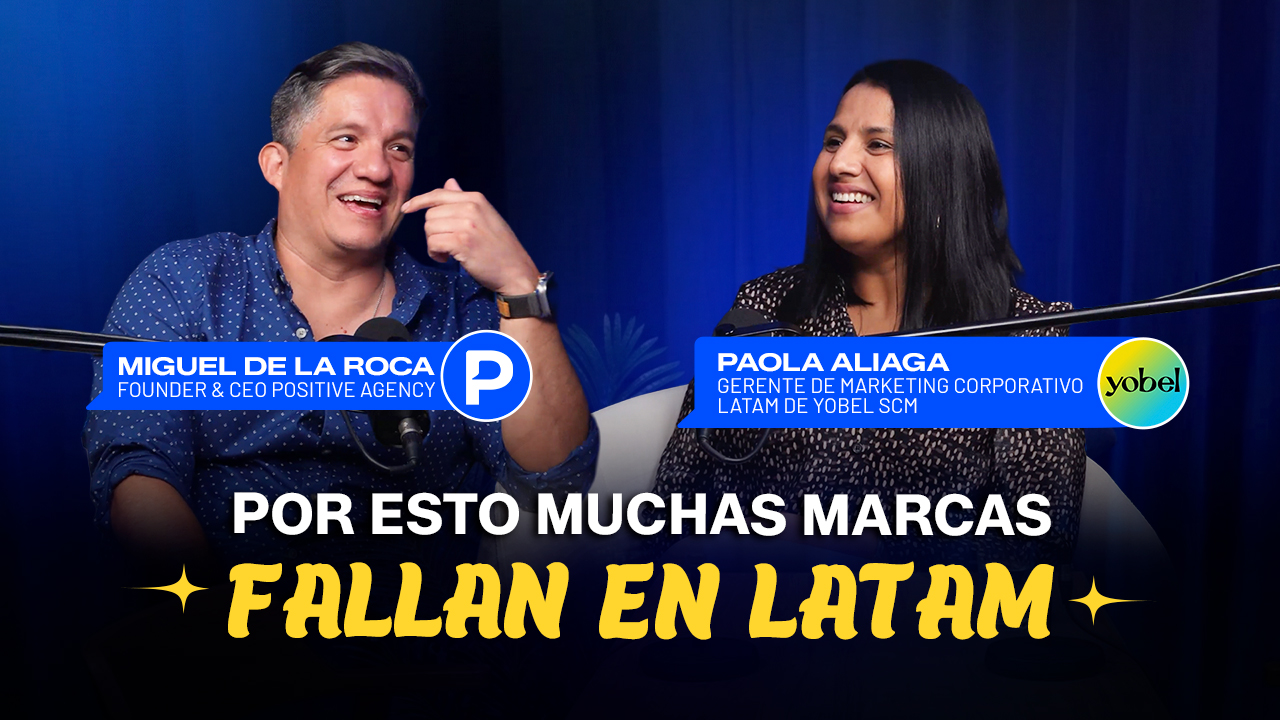
In this episode, we talk with Paola Aliaga, LATAM Corporate Marketing Manager at YOBEL, about the challenges of managing marketing across different Latin American countries and the importance of adapting each strategy to the context of every market.
Drawing from her experience managing nine countries, Paola shares lessons on leadership, B2B marketing, rebranding, regional campaigns, and the cultural differences that can completely change the way a brand communicates.
Paola also talks about her experience as a woman in industrial environments and how resilience and emotional intelligence have played a key role in her professional growth.
We also discuss how marketing goals connect with overall business objectives. Paola Aliaga explains that while each team may have its own goals, working in isolation can lead teams in different directions. That is why they have implemented OKRs, helping each area’s objectives support the company’s broader goals.
In B2B, social media plays a different role. LinkedIn is not only a space for employer branding, but also a platform where companies can position themselves as providers, share useful content with clients, and create partnerships or business opportunities. On other platforms, the value may be more closely tied to visibility and the image potential clients find when they start researching a company.
Rebranding is another topic covered in the conversation. Paola explains that changing a brand identity does not mean public perception will change immediately. Even after a well-received refresh, some people may still miss the previous colors or elements. These processes need time for the new brand to be understood and recognized.
That need for adaptation becomes even more evident when working on regional campaigns. Paola recalls an experience where the same piece worked well in the Andean region, while in some Central American countries it was perceived as too aggressive. Testing helped identify those differences and adjust the campaign before taking it to every market.
For brands looking to advertise in Latin America, her recommendation starts with understanding the people they want to reach. Knowing how they speak, behave, the cultural codes they use, and how they expect to see themselves represented can make the difference between a campaign that connects and one that simply feels adapted from another market.
Finally, the episode closes with a challenge featuring expressions from different LATAM countries. Phrases that may seem easy to understand can mean something completely different across borders, offering a simple example of the cultural diversity present throughout the conversation.
Watch the full episode on YouTube here 👇🏻:

How Do You Lead Teams of 12,000 People? | MADE IN LATAM EP13
In this episode, we talk with Natalia Berghusen, Head of Culture and Internal Communication at Grupo Delosi, about the role of internal communication within organizations, the building of corporate culture, and the challenges of managing teams across different markets in Latin America.
One of the topics that comes up during the podcast is the challenge of managing the same brand in different Latin American countries. Natalia explains that results can vary significantly between markets due to cultural differences, customs, and local contexts, forcing teams to closely observe what is happening in each country and make constant adjustments to understand what is working and what is not.
We also talk about professional development within organizations and the role that corporate culture plays in employee growth. Through a specific case study at Starbucks, she shares how someone can build a career all the way from operational roles to leadership positions when there are clear opportunities for training, guidance, and growth.
Another topic addressed is how internal communication can support employees throughout their entire journey within a company, from onboarding to offboarding. To achieve this, she highlights the importance of designing consistent experiences, taking care of every touchpoint, and working in a coordinated manner with departments like Human Resources and Legal.
Artificial intelligence is also mentioned; far from seeing it as a threat, she shares how her team uses it as a tool to brainstorm ideas, find new perspectives, and enrich everyday creative processes such as drafting messages and even developing more complex tasks. She explains how AI has become a support system to enhance communication work.
At another point in the conversation, Natalia shares a reflection on the purpose of companies and recalls how impactful it was to learn about an organization whose goal went beyond business, generating opportunities for more young people to access their first formal job.
Finally, the interview includes a Latin American idioms dynamic that puts the guest's knowledge of expressions used in different countries across the region to the test, highlighting the cultural diversity that characterizes LATAM.
Watch the full episode on YouTube here 👇🏻:

How to Create Ideas That Connect With Your Target | MADE IN LATAM EP12
In this episode, we sit down with David Correa, Creative Director at GUT Bogotá, to explore his creative process and the challenges shaping today’s advertising industry. Throughout the conversation, he shares his perspective on the value of great ideas, the growing role of AI in agencies, and what it takes to build campaigns that resonate with audiences across different markets.
The conversation begins with one of the industry's most talked-about topics: artificial intelligence. David explains how GUT Bogotá is integrating AI into its creative process and why he sees it as a tool that enhances creativity rather than replaces it. In his view, no technology can make up for a weak idea, while a strong idea will always be the foundation of a campaign that leaves a lasting impact.
Building on that reflection, we dive deeper into what defines a great idea for David. He believes it should feel fresh, stand apart from what already exists, and most importantly, connect with people. When these elements come together, an idea stands out not only for its originality but also for its ability to solve a problem and spark conversations.
Another key moment in the interview focuses on some of the projects that have had the greatest impact on his career. Among them, he highlights a campaign for Águila, one of Colombia’s most iconic beer brands, which aimed to redefine vallenato and bring it closer to younger generations. Through this case, he explains how brands can tap into culture to create messages with a much deeper impact.
The conversation also explores the differences between creating campaigns for local markets and global brands. David explains that when a campaign needs to travel across different countries, it is essential to find more universal insights that can connect with shared emotions. While strategy and data play a key role, he also highlights the importance of creative instinct and trusting ideas that have the power to move people.
Later in the conversation, we discuss advertising awards, a topic that often sparks debate within the industry. David shares his perspective on campaigns created solely to compete at festivals and explains why he believes the true value of an idea lies in solving a real client challenge and creating a genuine impact on the audience. For him, recognition becomes more meaningful when a campaign drives results and conversation, rather than simply collecting trophies.
Finally, the episode wraps up with a Latin American expressions challenge that tests David’s knowledge of sayings from different countries, highlighting once again the incredible cultural diversity across LATAM.
Watch the full episode on YouTube here 👇🏻:
.jpeg)
Why Is Gen Z Buying Y2K Digital Cameras?
A few weeks ago, we had a meeting with a client who threw us a bit of a curveball. They wanted to promote one of those classic digital cameras from the 2000s. Sounds a bit strange, right? Promoting a camera from twenty years ago!
And that wasn't even the half of it. If it had been a campaign aimed at Gen X or Millennials, we would have totally gotten it, but this was designed specifically for Gen Z.
The client explained that there is a massive trend of young people using digital cameras right now. It really got us thinking about how paradoxical it is that the generation raised alongside the best camera technology is now obsessed with the worst.
For decades, camera and smartphone manufacturers competed to offer more megapixels, better lenses, and even AI features designed to fix imperfections. Yet, many young people today are looking for the exact things the industry tried to leave behind.
Millennials and Gen Z
The difference has a lot to do with the technological era each generation grew up in.
Millennials lived through the transition. They developed film, recorded videos on family camcorders, and uploaded their first pictures to Facebook. For them, the arrival of smartphones was a clear upgrade, no longer needing to carry a separate camera, and the photos kept getting better and better.
Gen Z was born into a completely different world. They grew up with high-quality cameras, automatic filters, and apps that edit images in seconds. For them, getting a high-quality photo was never a challenge.
.png)
The Return of Digital Cameras
What started as a niche trend became impossible to ignore on social media. When Kendall Jenner posted an Instagram photo taken with a Canon PowerShot ELPH 350, the model instantly sold out on the resale market, with prices skyrocketing to 399 dollars according to Fast Company.
This was no isolated incident.
The Nikon Coolpix S6900 became a true hallmark of this trend, driving an explosive surge in searches across both eBay and TikTok according to TechRadar.
This newfound interest is also reflected in industry figures.
According to data from CIPA, global sales of compact cameras grew by 29.6% in 2025 compared to the previous year, marking two consecutive years of growth for the first time since 2007 following a long, steady decline.
The phenomenon can hardly be blamed on nostalgia. Many of these users weren't even born when these cameras were originally in their prime.
.png)
The Weariness of Perfection
Over time, digital platforms have pushed us toward increasingly polished versions of ourselves, packed with filters, editing, and heavy curation. Images stopped being memories and turned into content.
This saturation is starting to spark a backlash among younger generations.
According to a 2026 Sprout Social survey, 40% of Gen Z say they do not engage with AI generated content, and 56% consider publishing such content without a label to be one of the worst things a brand can do.
Against this backdrop, vintage digital cameras offer exactly what smartphones have spent years trying to eliminate. Harsh flashes, visible grain, imperfect colors, and flaws that make images feel more like a memory and less like a piece of content.
That is why their appeal goes far beyond aesthetics. We live in an environment where it is increasingly difficult to tell a real photograph apart from one that is generated or retouched, and those imperfections serve as a badge of authenticity.
Old digital cameras are not making a comeback because they produce better pictures. They are making a comeback because they produce pictures that look more real.
.png)
.jpeg)
The way people search online has changed forever.
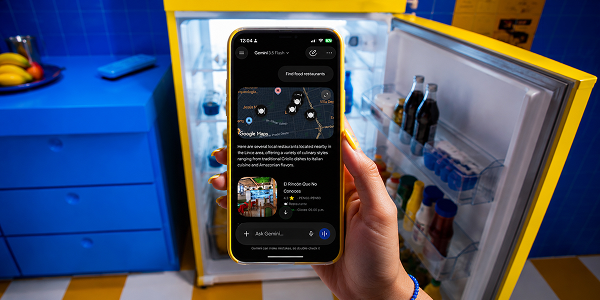
Searching online no longer looks the way it did a few years ago. Instead of opening multiple links and comparing information across different websites, more and more people are turning to tools like ChatGPT or Gemini, asking a question and getting an answer in seconds.
And this is not just a passing impression.
According to consulting firm Gartner, traditional search engine volume could decline by 25% by 2026 as users increasingly shift toward AI chatbots and conversational assistants to find answers to their questions.
This shift in search behavior is completely changing the way we consume information. In fact, even Google has started adapting by reinventing its search experience with AI Overviews, AI generated summaries that answer questions directly on the results page and let users continue the conversation without needing to open another website.
This new landscape raises an inevitable question, if users are no longer searching the way they used to, how can we make sure they find our content? The answer lies in GEO, or Generative Engine Optimization.
What is GEO?
GEO is all about positioning your website’s content so that AI engines select and cite it when answering user queries. Unlike traditional SEO, which is driven by keywords, GEO focuses on data quality, clear writing, and topical authority. This makes it easier for large language models to understand your content and pick it as their definitive answer.
To put it visually, if SEO was about optimizing your website to earn a front row seat on Google, GEO is about becoming a source that AI systems choose to reference when answering questions.
Put simply, GEO is the next evolution of SEO. It is an approach that brands, writers, and content creators can no longer afford to ignore. As more users turn to AI assistants for answers, the goal is to make sure those answers are drawing from our content.
Research supports this shift. A pioneering study conducted by researchers from Princeton University, Georgia Tech, and the Allen Institute for AI found that GEO techniques can increase a website's visibility in generative engine responses by as much as 40%.
At Positive Agency, we’ve embraced the challenge of creating content that AI can easily discover and recommend. Our process begins by using tools like Gemini and ChatGPT to identify emerging marketing and advertising trends across Latin America. From there, our team develops each article by cross-checking data and sources to ensure accuracy and reliability. We also leverage AI to help uncover and reference relevant statistics that strengthen our content.
This approach allows us to produce articles with the quality, relevance, and credibility that today’s generative search engines are most likely to surface and recommend.
So, how can we get AI to recommend our content?
This shift is becoming critical as digital habits evolve.
In fact, a study by S&P Global Market Intelligence reveals that 46% of U.S. online adults are already leveraging generative AI tools like ChatGPT, Gemini, or Copilot, a figure that has practically doubled in just 18 months.
As more people turn to AI to find answers and discover content, these platforms are quickly cementing themselves as the new gateway to the internet.
The good news is that you do not need to start from scratch. Many of the practices that have always worked in SEO still matter today. The difference is that we now need to make content easier for AI systems to understand and use.
According to Marcos Blanco, a digital marketing professor at ESIC University quoted in an article by BBVA, these are some of the most important recommendations.
Use reliable sources: Content backed by statistics, research, and verified information is more likely to be treated as a trustworthy reference by both search engines and AI systems.

Prioritize clarity and structure: Write in a way that is easy to read and easy to process. Clear headings, bullet points, and data tables can make a big difference. Well organized content helps AI systems interpret and extract information more accurately.
.png)
Use a question and answer format: AI assistants are built to solve questions. That is why content that anticipates common queries and answers them directly often has an advantage.
.png)
Keep your content up to date: The internet changes every day. If your content has not been updated in years, it is likely to lose relevance. Regularly reviewing and refreshing your content helps keep it accurate, useful, and competitive.
.png)
The Achilles' heel of AI
Despite all its advances, AI still has a significant weakness. It can get things wrong. Generative models build answers by drawing from multiple sources and, at times, may oversimplify information, leave out important context, or even present inaccurate information with a high degree of confidence.
This phenomenon, known as "hallucination," remains one of generative AI's biggest hurdles.
In fact, a joint study by researchers from Cornell, the University of Washington, the University of Waterloo, and AI2 revealed that in specific benchmarks, even the most advanced models managed to deliver completely hallucination-free answers only about 35% of the time.
That is why source quality and fact checking remain just as important as ever.
This also explains why high quality content remains so valuable. If AI systems rely on information from across the internet to build their answers, someone still has to create that information in the first place.
The more useful, clear, and trustworthy that content is, the more likely it is to be recognized as a credible source and included in future AI generated responses.
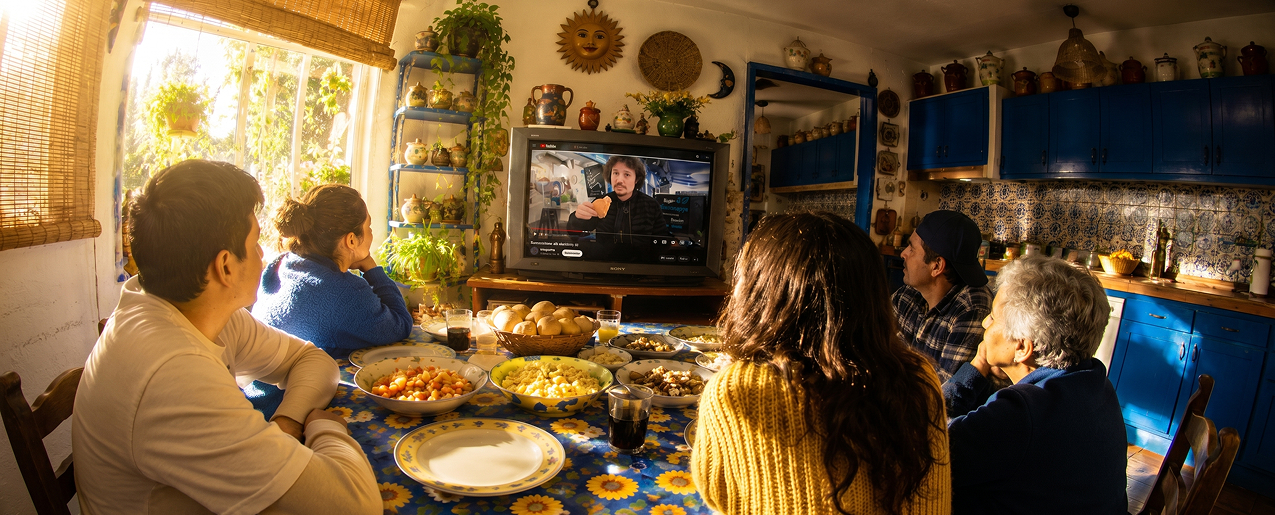
YouTube is the new TV
A few years ag, if someone had told us we’d spend more time on YouTube than watching traditional TV, we probably wouldn’t have believed it. Yet the numbers from Nielsen prove otherwise:
For more than a year, the platform has remained the number one streaming service on television screens, capturing nearly 10% of total TV audience share in the U.S.
What’s most striking is that, in the middle of the doomscrolling era and 15-second clips, audiences are reconnecting with long-form, deeply human stories.
YouTube is no longer just a video platform—it has become the world’s new cultural archive. The average user now spends 48 minutes a day on the platform, likely influenced by an interface that organizes content into seasons, much like our favorite TV shows.
And it’s not only beneficial for audiences. For creators, every upload becomes a long-term asset. Thanks to dynamic ad insertion, videos published years ago can continue generating revenue, turning a channel into a personal TV network that never stops working.
Top Creators and content leading the region
In LATAM, YouTube creators are no longer amateurs filming in their bedrooms. Today, the industry is driven by Latin American creatives producing high-quality audiovisual content that attracts millions of views across every kind of niche and genre.
Entertainment
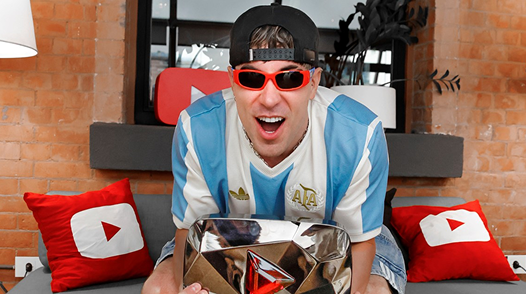
Alejo Igoa (Argentina): The undisputed king of 24-hour challenges and extreme stunts. He made history as the first solo Spanish-speaking creator to receive YouTube’s Red Diamond Creator Award—a prestigious milestone shared by only a handful of creators worldwide.
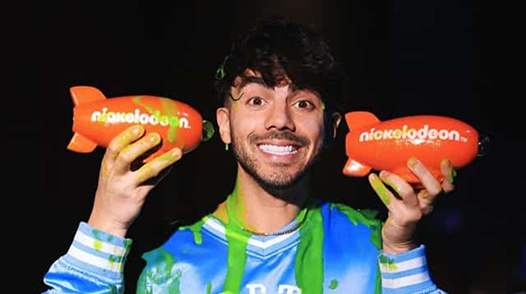
Fede Vigevani (Uruguay): He has successfully transformed his channel into a compelling blend of comedy and mystery that keeps fans hooked episode after episode. His influence extends well beyond the digital screen, selling out iconic live venues like the Movistar Arena and the legendary Gran Rex.
Travel and Documentary Chronicles
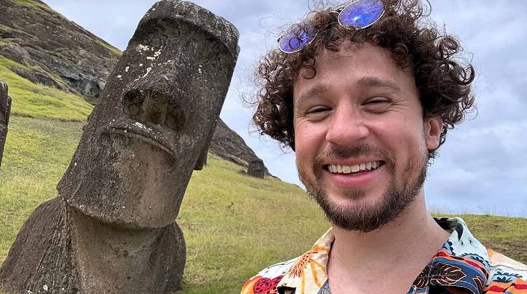
Luisito Comunica (Mexico): The gold standard for transforming travel vlogs into profound social commentary. His channel has evolved into a cultural archive, offering a unique perspective of the world through a Latin American lens.
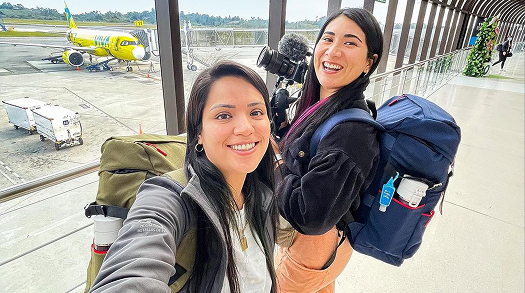
Misias pero viajeras (Peru): Fátima and Daniela shattered the myth that travel is a luxury reserved for the wealthy. Although they no longer create content together, their channel remains a definitive legacy of detailed itineraries and budget guides that travelers still rely on today.
Lifestyle, Wellness, and Education
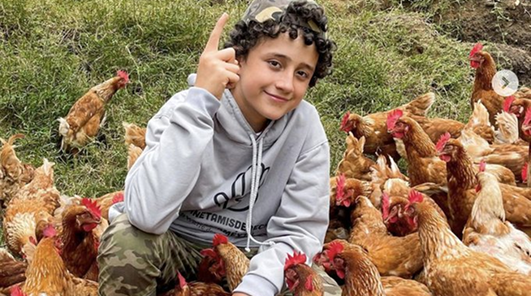
La Granja del Borrego (Colombia): What started as a guide to agricultural life has evolved into a captivating journey featuring exotic animal encounters and new adventures. Throughout this growth, his channel has stayed true to its educational roots, using humor to champion wildlife conservation.
Chingu Amiga (Mexico/Korea): The Korean creator who took LATAM by storm by documenting the "culture shock" of living in the region. Through humor and candid storytelling, she highlights the contrast between the rigid traditions of her home country and the warmth of Latino culture.

Mystery and True Crime
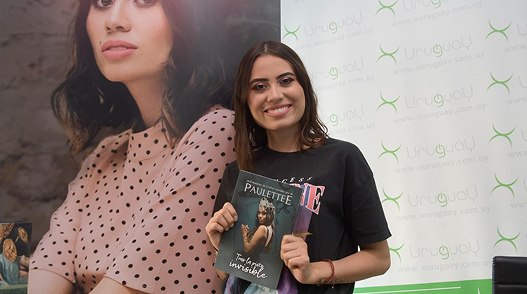
Paulettee (Colombia): Widely regarded as the "Queen of Mystery" in the Spanish-speaking world. Her channel stands out for its meticulous research and a gripping narrative style that masterfully balances the paranormal with true crime cases.
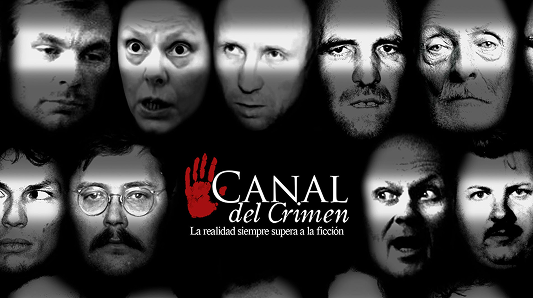
Canal del Crimen (Chile): Narrated by Álvaro Matus—author of Psicópatas chilenos—this channel is dedicated to documenting the chilling biographies of the most notorious serial killers and mass murderers in history.
The podcast boom
The resurgence of long-form content owes almost everything to podcasting.
According to Statista, the number of podcast listeners worldwide is expected to surpass 600 million by the end of this year.
Why? Because of the sense of companionship and the chemistry between hosts—that feeling that they’re friends sitting around the table with us, sharing a conversation.
Shows like El Cuartico (Venezuela) and Ouke (Peru) dominate the daily debate space with an informal, humorous style that blends current events with personal anecdotes and constant interaction with their audiences, who engage in real time through live chat.
At Positive Agency, we realized that analyzing the market from inside an office simply wasn’t enough. That’s how Made in LATAM a marketing and advertising podcast traveling across the region to interview some of the industry’s leading voices (you can check out these conversations on YouTube and Spotify).
The new main screen
Ultimately, YouTube content has evolved from fleeting moments into a living cultural archive that endures and is rediscovered over time.
The "big screen" in our homes no longer belongs to major corporations; it belongs to the stories we choose to let in—the ones that keep us company and connect us to the real world through a language that is both authentic and direct.
Has the great battle for the Latin audience begun?
It’s a fact! Latin America has become the crown jewel for digital platforms. Every day we see apps and brands choosing the region as their next destination, driven by a young, creative population that makes heavy use of social networks.
With mobile internet penetration at 65% and 413 million active users, and 94.2% of the world’s internet users on social media, it’s no surprise that attention is focused on this side of the planet.413 million active users, and 94.2% of the world’s internet users on social media, it’s no surprise that attention is focused on this side of the planet.
The Latin American audience doesn’t just consume; it also creates and shares trends that later go global. Just look at all the creators, online businesses, viral content and social media celebrities coming out of Mexico, Colombia or Argentina to understand why the Hispanic market is so sought‑after today.
The full story is told in numbers:
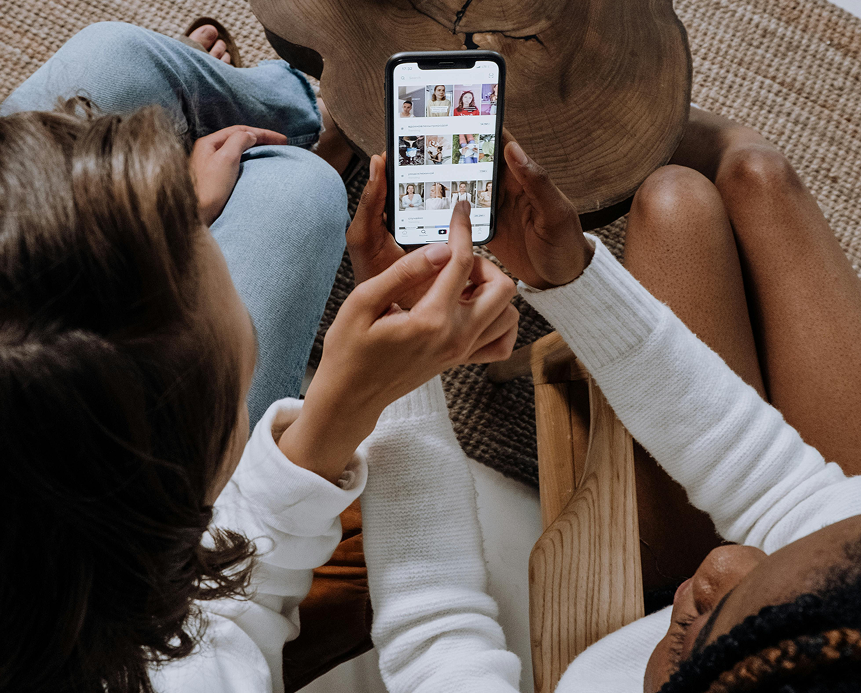
TikTok adds 189.7 million users in Latin America, according to Backlinko, which represents 18.29% of its global base and a 32.2% penetration rate among internet users.
YouTube, meanwhile, has more than 500 million monthly active users in the region. The size and engagement of these audiences are so significant that any company with global ambitions will want a slice of the pie. For content producers, the major barrier has always been language, and that’s where automatic translation begins to play a decisive role.
History and context of automatic translation
Why does translation become essential? Simple: because most Latin Americans do not speak English.
In Argentina, only 6.52% of the population has a high level, in Colombia the figure is 4.22%, and in Chile barely 9.53%.
The regional average of English proficiency has stabilized in recent years, according to this article from ef.edu, but it remains low for such a connected region. This means that the majority of the Hispanic audience consumes content in Spanish and that, without translation, it is difficult for a video in English to go viral in Bogotá or Lima. Hence the urgency platforms have to break down these language barriers.
Platforms have taken previous steps. For example, in 2016 Instagram launched its “See Translation button, which converts captions and comments into the user’s language.
Twitter (now X) allows posts to be translated by clicking a link below each message, and Google Translate has long been the best friend of many community managers.
These solutions helped to understand text, but they left out audio and video. Until recently, the voice of a creator remained unchangeable; those who didn’t understand the language were missing half the story.

New contenders in action: TikTok and YouTube
The race to win over the Latin audience isn’t limited to a single app. TikTok and YouTube are the places where people learn recipes, follow tutorials, and discover artists. For any brand, these spaces mean millions of eyes and ears waiting for content that speaks their language.
In light of this, both platforms have made advances in accessibility. TikTok introduced auto captions in 2021 to create automatic subtitles and, in 2022, added translations for captions, descriptions, and stickers. These options appear in the lower left corner of the video and allow a clip recorded in
Mexico City to be understood in Berlin or Seoul. The initial range includes languages such as English, Portuguese, German, Indonesian, Italian, Korean, Mandarin, Spanish, and Turkish, opening the door to a global consumption of Latin content.
Last year YouTube took another step forward: its auto-dubbing feature, launched in December, generates audio tracks in other languages for creators’ videos. The system detects the language, creates dubbed versions that creators can review and delete if they’re not satisfied, and it supports languages like English, French, German, Hindi, Indonesian, Italian, Japanese, Portuguese, and Spanish.
It still sounds a bit robotic, we know, but it reduces the friction of reading subtitles.
A bold new move from Instagram
The announcement that set this battle on fire came in August 2025. Meta revealed that Instagram Reels and Facebook videos can now be automatically dubbed between English and Spanish, using artificial intelligence that clones the creator’s voice and syncs their lips. According to Adam Mosseri, the goal is to break cultural and linguistic barriers.
The tool lets you activate dubbing at the moment of publishing, review how the audio sounds before sharing, and provides language based stats to know how many views each version receives.
This update can be interpreted in two ways. On one hand, Hispanic influencers will face multiplied competition: any creator in the U.S. or U.K. can automatically appear in Colombian or Peruvian feeds, and algorithms will reward the best content regardless of origin. On the other hand, a brand new route opens for Latin creators: someone in Buenos Aires who never spoke English can now appear on the timeline of someone in Los Angeles with their voice dubbed into English. The language barrier fades and the market expands. It’s no longer enough to just be funny or creative; you’ll have to stand out among thousands of global voices, and as a parcero from Colombia would say, ponerse las pilas with the storytelling.”
Conclusion: translation is not enough
Automatic translation is just the first step. Marketing experts remind us that localization and cultural adaptation processes are needed for the message to truly resonate. Localization adjusts content to the idioms and nuances of each country, while transcreation reimagining the idea so that it becomes emotionally relevant creates authentic connections. Without that work, a dubbed video may sound correct but fail to spark empathy; a cuate in Mexico or a pata in Peru will notice when something feel sout of place.
This is where Positive Agency comes in. We are an agency specialized in opening the doors of the Latin American market to brands and companies from other countries.
We understand that translation alone is not enough: you have to adapt the discourse, incorporate local references, and tell stories that connect with your audience’s passions and concerns. If your brand wants to seize the boom of the Latin audience, you need a partner who masters the art of transcreation

LATAM made a big statement with the Club World Cup
Bueeee, folks! So, how was the First Club World Cup? Well, it was just as good as it gets — especially for content creation in Latin America.
How is it possible that a tournament no one paid attention to at first became one of the most-watched events in the world and a key platform for content creation in the region?
To find out, we’ll dive into the memes, the broadcasts, the videos, and everything this high-impact global conversation left behind — and uncover those insights that show how sports and digital business go hand in hand.
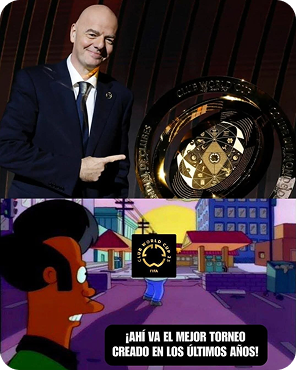
Cheers to DAZN’s digital strategy.
To begin understanding the impact this Club World Cup had in the digital ecosystem, we need to look at DAZN — the broadcaster that bet on an innovative digital strategy that revolutionized how the tournament was consumed in Latin America.
The platform streamed all the matches live for free, breaking away from the traditional pay-per-view model. This bold move not only made it easier for millions of fans to follow the competition, but also removed access barriers.
It was precisely this coverage that sparked what could be considered the first big conversation topic of the tournament.
A storyline that quickly turned into a source of memes, videos, and real-time engagement. Let’s take note of how a conversation can be capitalized on social media.

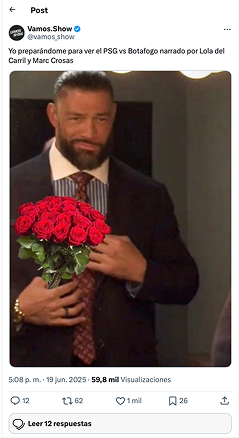
Lola del Carril and Marc Crosas: what a duo, mamita querida.
In the middle of the Porto vs Fluminense match, Lola and Marc began exchanging opinions about the game — some of which seemed a bit out of context. The mutual compliments they gave each other live on air were the spark that ignited a fun online conversation, with many claiming there was flirting going on between the Argentine commentator and the Spanish-Mexican ex-footballer.
The wave of memes, tweets, videos, and reactions became an unbeatable opportunity for DAZN, and for the commentators themselves, who rode the wave of popularity to present a more relatable and social media-friendly image during the broadcasts.
Translation:
A total banger in terms of viewership for DAZN and viral content — a brilliant real-time play by Lola and Marc, and a classy response to those who believe football should only be consumed through serious analysis and tactical breakdowns.
If there’s one thing we Latinos are great at, it’s finding the funny side of everything — and knowing how to run with it, especially on social media.
"Mom, when I grow up I want to be like the content creators in LATAM"
In addition to the official commentators, influencers and content creators from Latin America played a leading role in amplifying the Club World Cup experience in the digital ecosystem.
If there’s one thing we Latinos are great at, it’s finding the funny side of everything — and knowing how to run with it, especially on social media.
For example, Argentine streamer Davoo Xeneize, known for his passion for Boca Juniors (xeneize), hosted watch parties, live reactions, and match analysis across his channels on Kick, YouTube, and other platforms. With over 2 million subscribers on YouTube, Davoo drew tens of thousands of fans to watch the matches live with him.
Goals, celebrations, commentators, or memes — there were also specialized creators who viewed the sport from a different angle, one more aligned with business.
A clear example of this is the YouTube channel “El Negocio del Fútbol,” which focused on analyzing the economic impact of the next edition of the Club World Cup.
Other creators like “La Cobra , ” Charlie Carrillo , and Danigoals became amplifiers of everything happening throughout the tournament — from match results and player ratings to predictions for each new round. It was absolute proof of the drawing power that football has in Latin America, and of the wide variety of content formats it inspires, ranging from humor and economic analysis to even lifestyle content.
Did you see what the brands and creators did?
Many sports brands took advantage of their reach — for example, Adidas Argentina and Amstel sponsored content with Lola del Carril due to her rising popularity, while other sponsors invited streamers to create content during the tournament.
This collaboration between brands and creators boosted content distribution on social media, turning news and moments from the Club World Cup into viral topics that spread across every corner of the internet in Latin America.
In the end, the tournament’s digital conversation was no longer dominated only by FIFA’s official accounts or traditional media — it was co-created by a large community of digital storytellers who brought the passion of football to Twitter, TikTok, Instagram, YouTube, and Kick simultaneously.
Dive into the digital sports market in LATAM
This whole picture shows us that Latin America is one of the biggest, most passionate, and most committed football markets in the world. The case of DAZN made it clear:
When relevant and accessible content is offered, the Latin audience responds massively—creating memes, showing appreciation, and driving virality. With a shared language and rapid growth across platforms, what starts in one country can go viral across the region.
Over 9.2 million people watched the Spanish-language broadcast in the U.S. alone. 2.49 million attended matches in stadiums across the U.S.; Brazil, Argentina, and Mexico led foreign ticket purchases. And many global trends start right here. Investing in LATAM means gaining reach, loyalty, and a culture that turns content into community.
The digital footprint of the 2025 Club World Cup in LATAM shows how this region turns fleeting moments into long-lasting narratives, well beyond the final whistle. Embracing this mindset allows brands to connect more authentically with the Latin American audience — and to make sure their message resonates long after the event ends.
Micro-influencers: A key driver of marketing in LatAm
Why Microinfluencers?
You don’t need a million followers to connect with a million people.
Today, brands without massive influencer budgets are discovering the power of microinfluencers—content creatorswith smaller but highly engaged audiences. Microinfluencers tend to generate significantly higher engagement thanlarge-scale profiles. Recent studies show that microinfluencers (typically between 1,000 and 100,000 followers) canachieve average engagement rates close to 7%. That’s up to 60% more engagement than larger influencers, thanks tothe trust and closeness they maintain with their audience. A well-executed campaign with a 100K-follower profile canyield better results than a million-dollar investment focused on reach without genuine connection.
In countries like Peru, Mexico, Guatemala, and Ecuador, brands are earning public trust by betting on authentic contentand real voices. In an era where audiences skip traditional ads and seek honest relationships with brands,microinfluencers are rewriting the marketing rulebook. Brands that understand this shift are achieving what manyconsider the digital “holy grail”: staying relevant, converting without being pushy, and building community throughcloseness.
In a landscape saturated with ads and messages, microinfluencers have become the most trusted and relatable voices.With communities ranging from 1,000 to just over 100,000 followers, they strike a powerful balance: enough reach tocreate impact, and deep, authentic connection with their followers.
Unlike big-name celebrities, their content doesn’t feel like a paid spot—it feels like a genuine recommendation. They’resubject-matter experts, they chat with their followers, and they share from lived experience, making their posts feel liketrusted advice from a friend. Partnering with microinfluencers allows brands to integrate naturally into people’s lives,from within communities, with content that inspires trust, affinity, and relatability.
Now, let’s look at how this formula is already producing real results in countries like Peru, Mexico, Ecuador, and Guatemala.
Peru: Relatability and Credibility in Every day Life
In Peru, microinfluencers have proven that authenticity beats perfection.
The content that truly performs is the kind that feels real—unfiltered, unscripted, and born from everyday moments the audience can relate to. Brands that understand this have created memorable campaigns by embracing the simple but powerful.
Take creators like Christydinatali, Chocochifle.show, and Alisson.gonzaleezz, who use ironic humor and an unmistakable personal style to deliver sharp, no-frills perspectives. Without big production budgets, they responded authentically and personally to campaigns like Burger King’s “Los chanchos vuelan,” where the brand introduced its new Bondiola King sandwich via drone delivery. The result: real comments and high engagement. No celebrities—just microinfluencers sharing their love for pork and the grill.
Another standout case was the “Winter Season” campaign by Tottus. Instead of traditional models, the brand chose microinfluencers to showcase its new clothing line. The content felt so real and accessible that it went viral organically, sparking a wave of user-generated videos proudly showing off their outfits. The impact extended beyond engagement—it translated into sales.
.png)
In fact, in the first quarter of 2025, an influencer marketing platform connected 716 microinfluencers with various brands, generating over 342 million impressions, 34 million likes, and 459,000 shares. Brands like Tottus, BCP, and Kotex saw notable gains in visibility, traffic, and digital conversion thanks to these collaborations.
Key insight: In Peru, authenticity drives real connection. When brands embrace unfiltered content and work with microinfluencers, they don’t just reach people—they earn their trust. What’s everyday, spontaneous, and genuine stays longer in people’s minds—and hearts. Because here, what’s produced might catch attention, but what’s real stirs emotion. And that emotion is what converts.
Mexico: Storytelling withHeart and a Senseof Belonging
In Mexico, we’ve noticed a clear pattern among successful microinfluencers: they know how to tell soulful stories.
The content that truly resonates blends relatability, humor, and deep cultural belonging. And if there’s something that captivates Latin American audiences, it’s a well-told anecdote—those everyday tales that don’t seem like branded content but, in the right hands, seamlessly incorporate products without feeling forced.
A standout example is Carlos Zacu, a rising microinfluencer who has won over thousands with his raw, humorous storytelling. He draws from personal experiences, difficult moments, and relatable anecdotes. He’s not afraid to laugh at himself or move his audience with vulnerable truths. Thanks to his authenticity, brands like CeraVe, Garnier
México, Dove Men, and LaLiga have trusted him to reach new audiences. His work isn’t just content—it’s community built from the heart.
.png)
In recent events like the 2024 Copa América and Latin Grammys, TelevisaUnivision activated 16 influencers—mostly microinfluencers—for campaigns that reached 41.6 million video views and 3 million interactions, delivering an estimated ROI of 4 to 1 and an average cost of just $0.0045 per view.
Key insight: In Mexico, emotional storytelling rooted in local identity and humor is the strongest bridge between brand and audience. It’s not just about telling a story—it’s about telling it like a friend would: with warmth, wit, and honesty. When content feels familiar and part of daily life, the connection isn’t just made—it becomes unforgettable.microinfluencers, they don’t just reach people—they earn their trust. What’s everyday, spontaneous, and genuine stays longer in people’s minds—and hearts. Because here, what’s produced might catch attention, but what’s real stirs emotion. And that emotion is what converts.
Guatemala: Local Culture and Genuine Connection
In Guatemala, we’ve found a diverse community of microinfluencers who stand out for their authentic, relatablecontent with deep local roots.
What really connects here is what feels real—from home-cooked traditional recipes to honest stories of entrepreneurship, told without filters or frills.
Guatemalan microcreators understand that the real value lies in showing life as it is—and that’s what makes theirimpact so powerful. A prime example is Pao Sánchez, who’s built a solid Latin American audience thanks to hergenuine, spontaneous lifestyle. It’s exactly this real-life content—based on daily routines, relatable tone, and livedexperience—that’s attracted brands like Banco Cuscatlán, Remington, Pandora, and Warner Bros, who recognize herability to naturally weave products into content that truly resonates.
.png)
Another local success story involved an organic beverage brand that entered Guatemala, El Salvador, and Costa Ricathrough 150+ microcreators, generating over 350 unpaid Instagram posts and securing shelf space and productturnover with zero paid advertising.
Key insight: In Guatemala, authenticity isn’t a strategy—it’s a way of telling life. The content that resonates doesn’ttry to impress—it aims to connect. And when a story feels honest, it becomes a conversation.
Ecuador: Everyday Humorand Local Pride
In Ecuador, microinfluencers have tapped into a key truth: localinsights are gold. The moments we all live—but few know how to narrate—are the ones that build real connection.
In such a diverse country, the content that sticks is the kind that mixes authenticity, humor, and everyday life.These creators don’t need big productions. With a phone and a lot of truth, they make us laugh, reflect, and share.They use the language of the streets, the family, and the neighborhood to tell stories everyone recognizes.
One great example is Josh Paredes, a rising microinfluencer who’s built a strong community using short scripts andeveryday Ecuadorian and Latin American scenarios. Thanks to this organic and relatable approach, brands like KFC,DFSK (auto), Etafashion (retail), and Supermercados Akí now rely on her content to connect authentically.
.png)
Key insight: In Ecuador, the most impactful content is the kind that feels like it was made by “one of us.” The morereal, the stronger the bond—because here, trust isn’t earned with production value, it’s earned with truth.
In Ecuador, microinfluencers with 5,000 to 20,000 followers average about 1.28% engagement on Instagram, whilethose with 1,000 to 5,000 can reach around 3.5%. The smaller the audience, the greater the interaction rate—proving once again that authenticity outperforms scale.
Thinking of Collaborating with Microinfluencers?
Start by observing and listening: identify those already speaking about your brand organically and analyze what kind ofcontent truly connects with their communities. It’s not about big numbers—it’s about strong affinities. Then, define thevalues, emotions, and messages you want to convey, and partner with microinfluencers who reflect that same essence.
The secret is to build genuine relationships—not impose scripts. Be clear about your goals, but leave space for thecreator to bring their voice, style, and authenticity. Think of them as creative partners, not just advertising channels.And above all, amplify their content on your platforms—doing so gives them visibility, strengthens the bond, andshows your community they’re an active part of your brand’s story.
Remember: 44% of marketers already prefer working with microinfluencers because of their high engagement and costefficiency.
Why Latin America Isthe Ideal Groundfor MicroinfluencerDriven Brands
Latin America isn’t just a market—it’s a diverse, passionate, and connection-driven community. Here, microinfluencers aren’t just messengers—they’repart of the neighborhood, part of the daily conversation.
Their authenticity, relatability, and recommendation power make them essential allies for brands looking to go beyondtraditional advertising. In fact, a Nielsen study found that 92% of consumers trust recommendations from individualsmore than from brands themselves.
At Positive Agency, we understand that every country has its own codes, language, and cultural references. That’s whywe don’t offer a one-size-fits-all formula—we bring the cultural sensitivity needed to truly connect.
If you’re ready to speak to real audiences through authentic voices, we’re ready to build it with you. Let’s bring thatstory to life.
.jpeg)
TikTok leads in LatAm — and you can take advantage of it
Remember when marketing in LATAM was about billboards, TV, and radio spots, and we had to pretend digital was just a fad? Good times, right? Fast forward a few years, and now marketers can’t escape the scrolling vortex of TikTok. If you’re reading this, chances are you're no longer debating whether TikTok is "worthy" of your marketing dollars—you’re simply trying to figure out why it's crushing the social media competition in Latin America and how your brand can capitalize on it.
TikTok's Rise: More Than Just Dancing Teens
Sure, it started with teens dancing awkwardly to viral hits, but anyone still clinging to that stereotype has missed the bigger picture. TikTok's explosive growth in LATAM—Brazil, Mexico, Argentina, Colombia, and Peru leading the charge—is a testament to the platform’s intuitive understanding of local culture and trends. Unlike other platforms that tried to replicate global strategies locally, TikTok flipped the script, deeply integrating itself into LATAM culture. This approach turned the platform from "nice-to-have" to a strategic essential.
TikTok’s monthly active users in LATAM surpassed 150 million in 2024 alone. That's roughly the population of Mexico. Let that sink in.
Why is TikTok Dominating LATAM?
It's not sorcery (well, maybe just a bit)—it's actually down to a few key strategic moves:
First, TikTok didn’t just translate its content—it transformed it. Its localization strategy was clear: embracing the idiosyncrasies, humor, slang, and social cues specific to each LATAM country. Second, its algorithm. Ah, the famous algorithm. It's so precise it borders on creepy. Users find themselves in hyper-specific niches faster than you can say "engagement metrics."
Moreover, TikTok successfully captured the nuances of storytelling unique to LATAM—where emotions, humor, and authenticity reign supreme. In short, TikTok didn't force LATAM to adapt; TikTok adapted to LATAM.
Leveraging TikTok’s LATAM Dominance for Your Brand
Now, for the important part—how can your brand actually leverage TikTok’s LATAM dominance effectively?
Forget generic ads. Seriously. LATAM users sniff out inauthenticity faster than your clients question their ROI. Brands that win here embrace genuine storytelling, culturally relevant narratives, and yes—a dose of sarcasm and wit.
Here are a couple of strategic pillars your brand needs to build on:
1. Authenticity Over Everything
You know that polished corporate voice you love so much? Leave it behind. LATAM audiences on TikTok connect with real, raw, and relatable content. Brands excelling here leverage user-generated content (UGC), collaborate with local creators, and aren't afraid to show their human side.
If you’re still doing corporate-speak, your brand might as well wear a neon sign that says, "I don't belong here."
2. Tap Into LATAM’s Cultural Pulse
LATAM is not a monolith. Your campaign in Argentina won’t automatically work in Colombia. Dive into hyper-local trends, memes, and influencers. Partnering with specialized agencies deeply rooted in LATAM culture (hello, specialized social media and creative campaign agencies) can be a game changer. They already speak the language—figuratively and literally—and know how to turn engagement into meaningful ROI.
The Uniqueness of LATAM: Why Specialized Agencies Matter
Understanding LATAM's digital audience isn't as straightforward as applying a global template. The region’s idiosyncrasy is a competitive advantage if leveraged properly.
Agencies specialized in social media, digital analytics, creative campaigns, and paid media, especially those embedded in the LATAM market, can bridge the gap between global ambitions and local execution. They offer insights that generic global firms simply cannot match, making them essential partners in your TikTok LATAM strategy.
TikTok Isn't Just a Platform—It's a Cultural Playground
If you're not yet on TikTok in LATAM, your brand is missing the party, literally and figuratively. LATAM isn't just adopting TikTok; it's reshaping its landscape. As a marketer, the question is no longer if your brand should be on TikTok but how well you can integrate into the unique tapestry of LATAM digital culture.
In short, if your brand hasn't embraced TikTok in LATAM yet, it's about time to step up—or watch your competitors dance away with your audience.
.jpeg)
Myths and truths about viral content
Let’s be honest: “going viral” is the sugar high of digital marketing. It’s flashy. It spikes. It makes everyone on your team refresh the analytics dashboard every 15 minutes like addicts. But like all sugar highs, it crashes. Hard.
We’ve been sold the myth that virality is the apex of content success—the golden goose of reach, impressions, and “exposure.” But here’s the twist no one talks about at conferences: virality is a terrible long-term strategy.
Let’s unpack this myth, and more importantly, let’s talk about what really moves the needle—sustainable contagion.
Act I: The Cult of the Spike
The term “viral content” sounds sexy. It’s associated with meteoric growth, fame, and that irresistible dopamine hit when your brand trends for 36 hours on X (formerly Twitter) before disappearing into digital oblivion.
But think about the last viral piece you saw. What brand was behind it? Can you recall the message? The product? Or just the gimmick?
Exactly.
Most viral content is a one-hit wonder in a content landfill. The kind of thing marketers show in pitch decks, not because it sold anything, but because it made them look clever.
In reality, viral spikes rarely align with actual KPIs. No retention. No loyalty. No revenue growth. Just a fleeting moment of attention that too often serves vanity more than value.
“Virality is not a content strategy. It’s a lottery ticket disguised as a marketing plan.”
Act II: Contagion with a Purpose
Now let’s talk about what actually builds brands in the long run: sustainable contagion.
This is the idea that content can be designed to spread, not explode. That the value embedded in your message compels people to share it not because it's shocking or gimmicky—but because it’s useful, relatable, or makes them look smart.
It’s the slow burn that warms entire rooms. Not the firecracker that flashes and vanishes.
Sustainable contagion is about:
- Repetition with relevance.
- Shareability without sensationalism.
- Distribution strategies that respect the psychology of your audience.
We’re talking about creating content ecosystems, not content stunts.
And here’s where agencies that understand the Latin American mindset have a superpower. Our cultures don’t reward short-term flash as much as they reward stories that evolve, connect, and stay. That’s idiosyncratic loyalty—and it’s the perfect soil for sustainable contagion.
“Content isn’t meant to be shouted. It’s meant to be whispered in the right ear, by the right person, at the right time.”
Act III: How Sustainable Contagion Wins
Let’s play it out.
You’re a marketer trying to win over a fragmented, bilingual audience in the U.S. Hispanic market. You could hire an agency to make a TikTok that might (maybe) go viral. Or you could work with an agency that understands how content moves through trust networks.
Like comadres on WhatsApp.
Like uncles who share Facebook videos with their family group every morning.
Like Gen Zs who DM your memes because “this is so you.”
That’s sustainable contagion in action. Built through:
- Ongoing Social Media storytelling
- Culturally-aware Paid Media
- Precision Analytics that learn what spreads (and what doesn’t)
- Relatable Creative Campaigns that feel like inside jokes, not brand slogans
Because when you earn a share instead of chasing a share, you create real community.
And let’s face it—community is the new currency in marketing.
Closing the Loop: Let Virality Die
Look, we’re not saying viral moments don’t have value. If it happens, great. Use the spotlight. Just don’t build your marketing house on a viral foundation—because it will collapse under its own weight.
Instead, design your content like you’re building a movement, not a moment.
And if you want help doing that, work with people who actually get the nuance of culture, language, and relevance. Agencies like ours, who don’t sell vanity. We engineer value that spreads. “Don’t chase the explosion. Build the echo.”