.jpg)
Christmas without snow: Connecting with the Latin Spirit
Every year, brands roll out their Christmas campaigns. But while the Northern Hemisphere celebrates snow, fireplaces and hot drinks, in most of
LATAM, December means summer, music and family gatherings.
The result: many so-called universal creative codes end up feeling out of sync with Latin American reality — and out of context.
So why not tell the stories that really happen here? Long family tables, secret-Santa exchanges, or the big Christmas dinner. When the story starts
there, it feels genuine and unmistakably Latin.
Global campaigns don’t always translate well.
Many brands thrive in their home markets, but when the same idea lands in LATAM, something gets lost.
The ad looks festive, but it doesn’t connect.
What usually goes wrong?
- Winter codes: snow, sweaters and hot chocolate, right in the middle of summer.
- Neutral casts and accents that don’t sound like the people from the region.
- Slow-paced music, when here the celebration is loud, joyful and shared.
- Moments that don’t fit. Christmas is celebrated on the night of the 24th, not the morning of the 25th.
- Imported decorations that cover up local flavors, colors and traditions.
.png)
So, what does Christmas in LATAM really look like?
From the moment December begins, offices, schools and groups of friends play “amigo secreto”, where small gifts are exchanged until the final reveal. In Mexico, “Posadas” kick off with piñatas and ponche, while in Colombia, the “Novena de Aguinaldos” brings together families and neighbors.
Cities light up with decorations and Christmas fairs. There are last-minute shopping sprees and carols all month long, especially in Peru, where Los Toribianitos and their classic “Cholito Jesús” fill the air.
On Christmas Eve, Latin Americans dress up in their best clothes, Christmas in pajamas isn’t really a thing here. Families gather to enjoy the big Christmas dinner, filled with turkey, pork, tamales, hallacas, salads, desserts and, of course, the beloved panetón.
At midnight, baby Jesus is placed in the nativity scene, people raise a toast, fireworks light up the sky and gifts are opened. The celebration doesn’t end there, the music keeps playing, and families stay up late talking, laughing and sharing one more drink.
Christmas in LATAM is a celebration that’s lived and shared together.
.png)
What can global brands learn?
Map local traditions: Choose a real moment like amigo secreto or Christmas Eve and tell that story in full.
Local voices and faces: Use words, accents and people that reflect each country and city’s diversity.
A clear product role: Show how your brand makes that moment better—by helping prepare dinner, arrive on time or set up the perfect playlist.
Global and local symbols: Christmas trees and lights, yes—but mix them with long family tables, local carols, traditional dishes and subtle regional details.
Useful content: Quick recipes, country-specific playlists, gift guides or toast ideas.
And the numbers back it up: in LATAM, 62% of brand choices are local or regional, according to The Brand Footprint 2024 report.
In such a diverse region, real connection with consumers starts by recognizing their identity, their environment and their way of celebrating.
Cases and learnings
Panetón D’Onofrio (Peru)
Every year, the brand returns to the same idea: Christmas in Peru feels like home — surrounded by people and a panetón at the center of the table. Simple stories, local cast and real traditions.D’Onofrio shows that when a scene feels familiar, you don’t need big plot twists — it’s enough to tell it as it really happens.
.png)
Claro (Colombia)
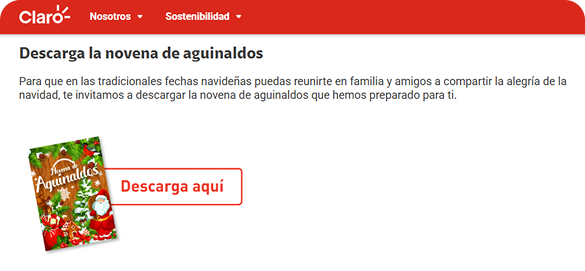
The telecom brand created a digital version of “La Novena de Aguinaldos” for people to download and share, bringing one of December’s most beloved rituals online and making it accessible to everyone.
Claro shows that you can take an existing tradition and turn it into something useful for your audience. This way, the brand stays present right where people already are, in their customs and in their everyday lives.
Harina P.A.N. (Venezuela)
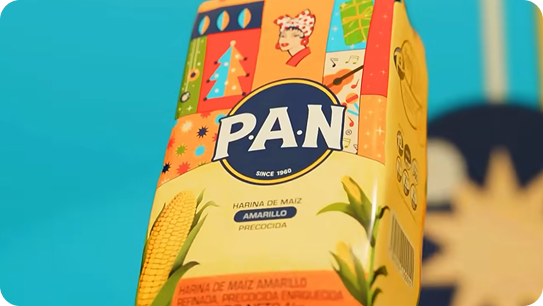
The brand celebrates hallacas, a centerpiece of the season, by launching a special holiday packaging that reflects the spirit of Venezuelan festivities. It also joins the celebration by including the product in “combos hallaqueros” and sponsoring the “Festival de la Hallaca”.
Harina P.A.N. shows the power of embracing a cultural ritual that drives purchase behavior, like making hallacas, to earn a place at the table.
Pollo Campero (Guatemala)
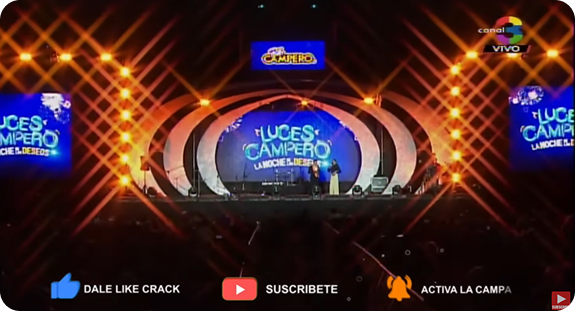
The brand hosts a massive year-end event featuring fireworks and drone shows that bring families together and mark the start of the Christmas season.
Pollo Campero shows that by connecting with a tradition that brings people together, a brand can become the true host of the celebration.
Conclusion: Understanding the region is the best strategy
Winning Christmas in LATAM isn’t about changing the decorations, it’s about reading December’s emotional calendar, choosing the moments that truly represent the region, and offering simple solutions that make what already happens at home even easier.
In a region where 62% of brand choices are local or regional, the campaigns that truly resonate are the ones that understand the tone, timing and symbols of each country.
When a brand adapts to the local context, it earns a place in group chats, at the dinner table and in people’s memories, leaving them with the feeling that the brand speaks their language.
If your brand wants to speak that language with a local accent, Positive Agency is here to help.
We adapt global messages to the LATAM context and turn them into stories that connect and get shared.
Want your campaigns to sound more local and perform better? Get in touch. We’re the partner that speaks LATAM’s cultural language.
iPad, Paper and Scissors. Mix Media Emerges as a Creative Alternative
It’s becoming increasingly hard to surprise anyone with what we see on social media. Fortunately, there are still techniques that break the mold — like collage.
Whether static, animated, or mixed with physical objects, collage and mix media are experiencing a revival on social platforms driven by Gen Z.
We’re talking about a visual storytelling style that blends illustration, archival material, real-life objects, and animation — transforming into small films known as video collages, analog interventions in a digitized world, or a combination of various elements that grab attention and stand out in a saturated feed.
Let’s take a closer look at the impact of a technique that once seemed reserved for editorials or contemporary art — and is now ready to be used in brand content.
Is Mix Media a Response to AI?
We’re seeing more and more campaigns that feel like they came from the same prompt — which might be a normal curve in the creative industry’s process of adapting to AI. (Remember when there was a time all brands were basically posting the same things on social media?).
In the midst of that debate, collage emerges as an alternative. With its imperfect nature, it brings back the human touch, artisanal detail, and the beauty of chaos.
Each piece is unique, non-replicable. And in these times of digital saturation, that feels like a breath of fresh air.
Latin America is no exception to the growing interest in alternative techniques. More and more creators are taking cutting, pasting and digitizing very seriously — not just as a hobby, but as a new visual language.
Here are some of the names worth following:
Latam Creators Who Are Seriously Killing It
- Cortaypega: Colombian artist who creates editorial collages and collaborates with brands. Her style is poetic, rich in symbols and soft narratives.
- Vero Calderon (@elvlogdetrin): Peruvian writer and artist. She has collaborated with Buscalibros, showing that more intimate content can also be part of a campaignKamiru: This Peruvian artist has a music video-style aesthetic that grabs attention. She created a video collage for Reebok with a very compelling editing rhythm.
- amiru: This Peruvian artist has a music video-style aesthetic that grabs attention. She created a video collage for Reebok with a very compelling editing rhythm.
- Valcollage: Venezuelan artist who teaches how to create collages, shares resources, and has over 40,000 followers on her platforms.
- Mara Ocejo: Mexican collagist who has illustrated for major outlets like The New York Times — a clear example of how this technique can reach global media.
- Magu Villar: Argentine collagist who blends illustration, collage, and storytelling for social media.
Would This Technique “Stick” with My Brand?
Can you imagine a campaign where the product doesn’t float on a white background, but instead becomes part of a handcrafted scene — built with paper, threads, and cutouts that move in and out of frame? Or a reel where, instead of generic motion graphics, there’s a small, handmade story?
This type of content can:
- Be the hero content of a product launch.
- Work as content hooks for social media.
- Stand out during seasonal campaigns (Christmas, Father’s Day, etc.).
Connect with audiences tired of “more of the same.”
One thing we love about this technique is that it forces a previous step that makes all the difference: the analog one. And that’s key. Before anything is rendered, creators play with paper, fabric, magazines, modeling clay, and scissors. That physical process gives the piece a kind of soul that digital simply can’t replicate.
So, How Do We Build This Together?
At Positive, we can help you:
- Find and connect with these types of creators.
- Develop editorial, product, or campaign ideas using mix media.
- Integrate collage into your content strategy.
- Explore other techniques that can enhance your brand’s visual identity.
According to this LinkedIn article, in the coming years there will be a growing trend to value human-made content over artificial output.
This isn’t about cutting and pasting for the sake of it. It’s about telling stories differently. Because in a world where everything starts to look the same, daring to stick things together in a new way might be exactly what your brand needs.
.jpg)
Prime Time is Latin: What Bad Bunny’s Presence at the 2026 Super Bowl Reveals About the Cultural Power of This Side of the World
A perspective from Positive Agency on the new protagonism of Latin culture in global marketing.
The year is coming to an end. Christmas lights are already glowing in shopping malls, and among them, that synthetic 80s music—born from MIDI rhythm boxes—blends with what’s coming through my headphones.
As I warm up my coffee and open my laptop to join the first meeting of the day, I think about how everything changes. At the agency, we understand that movement as something natural. Our work is not just to communicate but to read and decode the digital culture of a region as dynamic as Latin America.
In the virtual waiting room, someone has left their microphone on. A Caribbean track seeps in—a mix of percussion and Spanglish that takes me back to the first days of the year, close to my birthday. I don’t have photos on my desk, but one thought pops into my head: “I should’ve taken more pictures.”
Curious title for an album, I think, right as I’m about to join a meeting where images mean everything—and where we’d never think of “throwing them away.”
Musical tastes aside, that coincidence makes me pause. Between metrics, strategies, and deadlines, we sometimes forget why culture matters so much in what we do. Maybe hearing Bad Bunny in the waiting room, while scrolling through Resident Advisor, helped me connect the dots.
A Cultural Game-Changer for Global Marketing
When the NFL confirmed Bad Bunny as the headliner for the 2026 Super Bowl Halftime Show, it didn’t just announce a performance—it sent a message to the marketing world.
The Puerto Rican artist, who sings mostly in Spanish or Spanglish, represents a generation that embraces its roots and celebrates cultural identity.
While millions prepare to watch the biggest game of the year, brands are preparing to understand how Latin culture has become the emotional engine of the U.S. market.

The Latin Shift of the U.S. Market
Over the past decades, the growth of the Latin audience in the United States has reshaped the country’s consumption map.
Latinos now represent over 20% of the total population (U.S. Census Bureau, 2024) and show one of the fastest-growing rates in purchasing power
Yet, according to a 2025 study by XR Global source , only 4% of Super Bowl commercials featured Latin talent or cultural references—a figure far below America’s demographic reality. That gap signals a clear opportunity for Latin marketers.
The distance between cultural influence and commercial visibility remains wide—but it’s closing fast.
Bad Bunny embodies that transformation. He’s no longer a “Latin artist succeeding in the U.S. but a global artist redefining
the mainstream, reflecting decades of Latin American culture exported to the world.
For brands, this means an open door to step into the landscape of Latin cultural storytelling—a space that deeply interests us.
In 2025, the advertisers who dominated the Super Bowl conversation—Anheuser Busch, Michelob ULTRA, Lay’s, and Pfizer— did so not only through visual creativity but through narrative authenticity.
Audiences no longer respond to spectacle without purpose; they seek coherence, tone, and cultural rhythm.
In 2026, Spanglish will be the event’s native language.
“Spanglish, Latin aesthetics, and cultural references will no longer be creative winks—they’ll be the first lights of a new era in global communication.”
The challenge isn’t to speak like Latinos, but to speak from a culture that has become collective—and no longer foreign—to the American market.
The Power of Creating from Culture
Advertising has learned that translation isn’t enough.
The next step is to co-create from within culture, not just represent it superficially.
This means integrating Latin talent across every level of the creative chain—from copywriters and art directors to strategists and data analysts—to generate genuine and original campaigns.
That’s the approach we take at Positive Agency.
As a team, we believe cultural identity not only inspires creativity—it defines strategy.
We combine local insight, regional sensitivity, and global execution to help brands connect with audiences through emotion and cultural truth.
Bad Bunny is proof that we’re on the right path. Latin culture is no longer overlooked—it’s the starting point of a new, hyperconnected, transcultural form of communication.
Brands that understand this will stop “including” and start belonging to cultural movements.
According to Think with Google, bilingual consumers process emotions more intensely in their native language.
For the 2026 Super Bowl, using Spanish or Spanglish won’t be a differentiation tactic—it will be a manifestation of cultural authenticity.
In this context, language stops being a code and becomes a form of connection.
Latin Culture Is Inevitable
The challenge for brands isn’t to “ride” the Latin wave, but to understand that this wave already sets the rhythm of global culture. Brands that grasp this will be closer to what’s now known as cultural leadership.
“In 2026, it won’t be enough to be at the Super Bowl. Brands will need to be in the conversation across their digital ecosystems.”
Brands That Already Understand the Latin Power
Before Bad Bunny takes the world’s biggest stage, some brands have already opened the path for Latin culture in U.S. advertising.
Coca-Cola, with its Hispanic Spark campaign, proved that a Latin narrative can coexist with a global brand—authentically and at scale.
T-Mobile has launched bilingual campaigns like #SomosMás spot, designed for Hispanic U.S. markets, celebrating the diversity and resilience of the Latin community. It also maintains T-Mobile en Español and promotions for families living between two cultures.
That narrative consistency has allowed it to build a genuine bond with Latin audiences.
According to Kantar (2024), 64% of Hispanic consumers prefer brands that recognize their cultural identity—an insight T-Mobile has successfully turned into growth. (Source: Kantar North America, Creating Marketing Impact with the Hispanic Community)
These examples confirm the trend: Latin brands are no longer asking for space in the U.S. market—they’re building it themselves.
That sets the stage for Bad Bunny’s performance to be the rule, not the exception.

The Power of Creating from Culture
That same cup of coffee from the morning still sits on my desk, now a little cold—the moment I enjoy it most, because it means the day is almost over.
With the last sip, I think about how the 2025 Super Bowl proved that the world’s most expensive advertising slot isn’t won by budget, but by cultural purpose.
In 2026, that purpose will speak two languages and resonate across millions of homes that see Latin culture as a shared identity.
At Positive Agency, we believe that taking a strategic and creative stance toward this phenomenon brings us closer to the right path.
That’s our competitive advantage.

Has the great battle for the Latin audience begun?
It’s a fact! Latin America has become the crown jewel for digital platforms. Every day we see apps and brands choosing the region as their next destination, driven by a young, creative population that makes heavy use of social networks.
With mobile internet penetration at 65% and 413 million active users, and 94.2% of the world’s internet users on social media, it’s no surprise that attention is focused on this side of the planet.413 million active users, and 94.2% of the world’s internet users on social media, it’s no surprise that attention is focused on this side of the planet.
The Latin American audience doesn’t just consume; it also creates and shares trends that later go global. Just look at all the creators, online businesses, viral content and social media celebrities coming out of Mexico, Colombia or Argentina to understand why the Hispanic market is so sought‑after today.

The full story is told in numbers:
TikTok adds 189.7 million users in Latin America, according to Backlinko, which represents 18.29% of its global base and a 32.2% penetration rate among internet users.
YouTube, meanwhile, has more than 500 million monthly active users in the region. The size and engagement of these audiences are so significant that any company with global ambitions will want a slice of the pie. For content producers, the major barrier has always been language, and that’s where automatic translation begins to play a decisive role.
History and context of automatic translation
Why does translation become essential? Simple: because most Latin Americans do not speak English.
In Argentina, only 6.52% of the population has a high level, in Colombia the figure is 4.22%, and in Chile barely 9.53%.
The regional average of English proficiency has stabilized in recent years, according to this article from ef.edu, but it remains low for such a connected region. This means that the majority of the Hispanic audience consumes content in Spanish and that, without translation, it is difficult for a video in English to go viral in Bogotá or Lima. Hence the urgency platforms have to break down these language barriers.
Platforms have taken previous steps. For example, in 2016 Instagram launched its “See Translation button, which converts captions and comments into the user’s language.
Twitter (now X) allows posts to be translated by clicking a link below each message, and Google Translate has long been the best friend of many community managers.
These solutions helped to understand text, but they left out audio and video. Until recently, the voice of a creator remained unchangeable; those who didn’t understand the language were missing half the story.

New contenders in action: TikTok and YouTube
The race to win over the Latin audience isn’t limited to a single app. TikTok and YouTube are the places where people learn recipes, follow tutorials, and discover artists. For any brand, these spaces mean millions of eyes and ears waiting for content that speaks their language.
In light of this, both platforms have made advances in accessibility. TikTok introduced auto captions in 2021 to create automatic subtitles and, in 2022, added translations for captions, descriptions, and stickers. These options appear in the lower left corner of the video and allow a clip recorded in
Mexico City to be understood in Berlin or Seoul. The initial range includes languages such as English, Portuguese, German, Indonesian, Italian, Korean, Mandarin, Spanish, and Turkish, opening the door to a global consumption of Latin content.
Last year YouTube took another step forward: its auto-dubbing feature, launched in December, generates audio tracks in other languages for creators’ videos. The system detects the language, creates dubbed versions that creators can review and delete if they’re not satisfied, and it supports languages like English, French, German, Hindi, Indonesian, Italian, Japanese, Portuguese, and Spanish.
It still sounds a bit robotic, we know, but it reduces the friction of reading subtitles.
A bold new move from Instagram
The announcement that set this battle on fire came in August 2025. Meta revealed that Instagram Reels and Facebook videos can now be automatically dubbed between English and Spanish, using artificial intelligence that clones the creator’s voice and syncs their lips. According to Adam Mosseri, the goal is to break cultural and linguistic barriers.
The tool lets you activate dubbing at the moment of publishing, review how the audio sounds before sharing, and provides language based stats to know how many views each version receives.
This update can be interpreted in two ways. On one hand, Hispanic influencers will face multiplied competition: any creator in the U.S. or U.K. can automatically appear in Colombian or Peruvian feeds, and algorithms will reward the best content regardless of origin. On the other hand, a brand new route opens for Latin creators: someone in Buenos Aires who never spoke English can now appear on the timeline of someone in Los Angeles with their voice dubbed into English. The language barrier fades and the market expands. It’s no longer enough to just be funny or creative; you’ll have to stand out among thousands of global voices, and as a parcero from Colombia would say, ponerse las pilas with the storytelling.”
Conclusion: translation is not enough
Automatic translation is just the first step. Marketing experts remind us that localization and cultural adaptation processes are needed for the message to truly resonate. Localization adjusts content to the idioms and nuances of each country, while transcreation reimagining the idea so that it becomes emotionally relevant creates authentic connections. Without that work, a dubbed video may sound correct but fail to spark empathy; a cuate in Mexico or a pata in Peru will notice when something feel sout of place.
This is where Positive Agency comes in. We are an agency specialized in opening the doors of the Latin American market to brands and companies from other countries.
We understand that translation alone is not enough: you have to adapt the discourse, incorporate local references, and tell stories that connect with your audience’s passions and concerns. If your brand wants to seize the boom of the Latin audience, you need a partner who masters the art of transcreation
.png)