.jpg)
Growth hacking in Spanish and technical jargon
Let’s start in Miami. A startup founder—let’s call him Chad—is pitching his edtech app to a room full of Colombian parents. His deck is filled with words like “CAC,” “LTV optimization,” “scaling loops,” and “viral coefficient.” He ends his speech with: “And that’s how we hacked our way to 100K users!”
The room stares back at him like he just recited the periodic table in Klingon. One of the parents timidly raises a hand and asks: “¿Pero qué significa hackear usuarios?”
Spoiler: the pitch tanked.
Spoiler #2: this happens more than you think.
Jargon doesn’t travel well. Especially when you’re crossing cultural borders, not just linguistic ones.
“We’re not translating. We’re transplanting.”
That’s a phrase we use often in Latin American marketing strategy. Because when a U.S. brand thinks all it takes to scale in Spanish-speaking markets is to hire a translator or copy-paste their tactics into a Canva template with salsa music… things go wrong. Fast.
Growth hacking isn’t just about A/B tests and onboarding funnels. It’s about contextual velocity.
And if the context isn’t right—your growth will rot before it ripens.
Let’s break this down with an example you’ll love (or hate, depending on where your budget went):
A DTC brand selling smart fitness gear tried running Facebook ads in Mexico with copy like:
“Reach your KPIs. Bio-optimize your day. Hack your routine.”
And here’s what the audience read:
“Suena bonito, pero ¿qué mier... están diciendo?”
Engagement was dead. Comments were mostly emoji laughs and confused reactions. The campaign tanked.
Why? Because nobody in Guadalajara, Bogotá or Lima is thinking about 'bio-optimization' when doing sit-ups. They’re thinking about not getting yelled at by their trainer or about how they’ll explain to mamá that they bought another gadget instead of paying off their credit card.
Growth needs cultural nuance. Not cultural negligence.
Let’s make one thing clear: the Latino market doesn’t need you to “dumb down” your brand.
They just need you to understand what they value.
If your growth strategy assumes that everyone thinks like a Bay Area product manager… you’ll miss the point (and the profit).
Here’s what actually drives conversion in Latin America:
- Trust, not just tech.
- Social proof from people like me, not influencers from Silicon Valley.
- Relatability over automation.
- Emotion-first, data-second. (Yes, we love dashboards—but we cry at commercials too.)
You can be the most technical, optimized, AI-powered startup in the world, but if you say “retargeting funnel” to someone whose idea of marketing is still tied to la feria del barrio, you’re not landing. You’re floating.
From Growth Hack to Culture Crack
So, what’s the fix? Should we erase every metric-driven tactic from the playbook?
No. But we do need to reframe.
Growth hacking in Spanish isn't just translation. It's reinvention.
It’s asking:
- Would this campaign go viral in Cartagena without paid media?
- Would a Cuban abuela understand the value prop?
- Would a Mexican Gen Z repost this if it didn’t have a celebrity?
You start winning when your brand stops acting like a tourist and starts acting like a local disruptor.
The Latin American Growth Formula (aka: what your agency should actually be doing)
Want growth? Start here:
1. Local slang isn’t optional.
If your CTA says “optimize your flow,” you're out. If it says “pon tu rutina en modo bestia,” you're in. (Yes, even for SaaS.)
2. Humor beats data—until trust is built.
Remember: many Latin American consumers have been burned by shiny foreign tech. They won’t be impressed by charts until they like you.
3. Your metrics need a human face.
We don’t just want to hear “+78% user retention.” We want to meet Lucía, a 37-year-old mom in Quito who’s using your app to help her kids study. Tell us about her.
4. Let the emotion lead the funnel.
Start with storytelling. Then plug in the tracking pixels. Not the other way around.
So… should you go it alone?
You could.
You could keep running Google Ads in Spanish that sound like Google Translate and crossing your fingers for CAC to drop.
Or…
You could partner with an agency that’s been in the trenches—testing, launching, and scaling brands that actually stick in Latin America.
Because when you treat the Latino market like a “segment,” you lose. When you treat it like a culture, you win.
And here’s the thing: we don’t just get the language. We get the rhythm. The timing. The emotion. That’s what drives sustainable growth south of the border. So next time you're thinking of hacking growth in Spanish, maybe start by unlearning English.
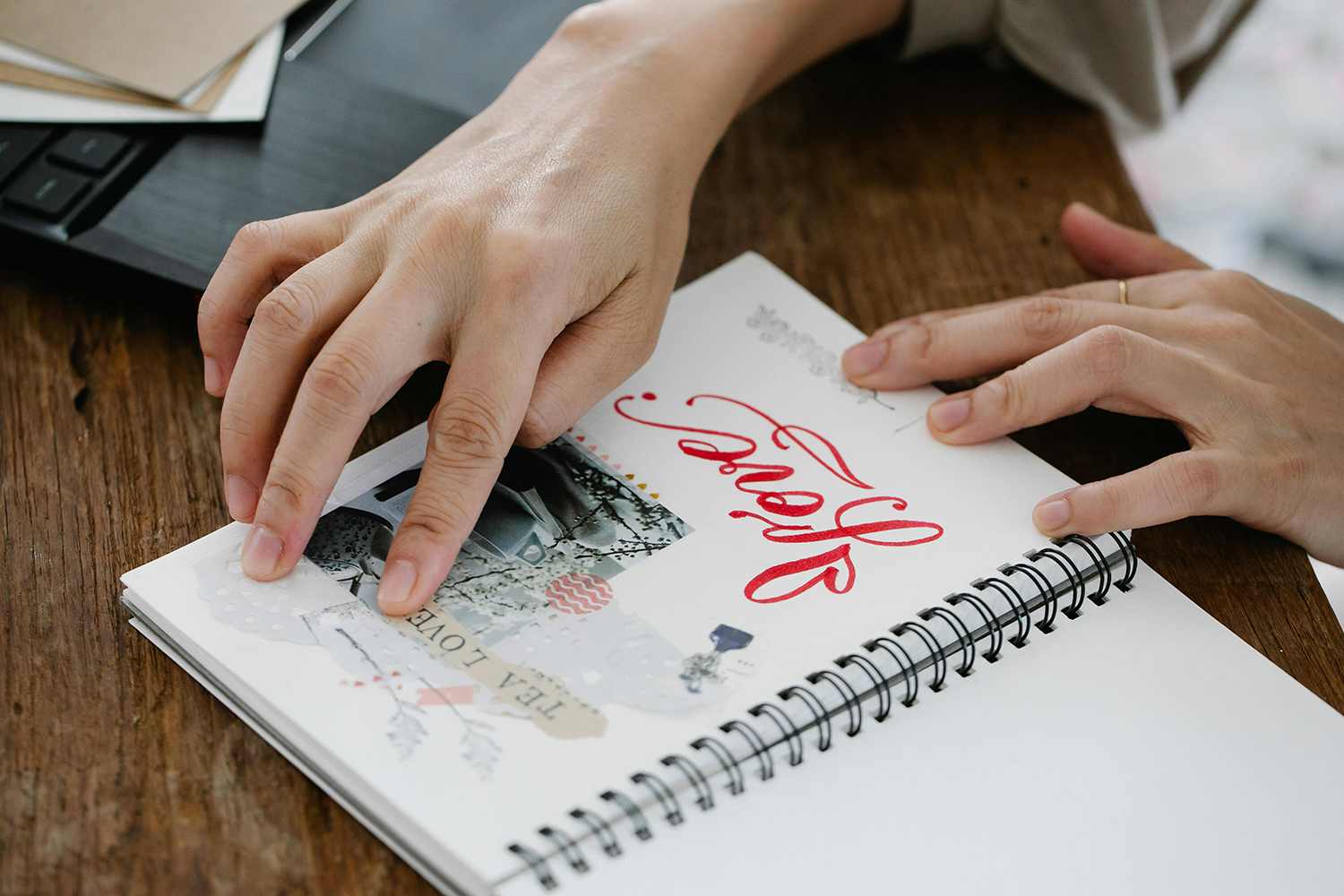

iPad, Paper and Scissors. Mix Media Emerges as a Creative Alternative
It’s becoming increasingly hard to surprise anyone with what we see on social media. Fortunately, there are still techniques that break the mold — like collage.
Whether static, animated, or mixed with physical objects, collage and mix media are experiencing a revival on social platforms driven by Gen Z.
We’re talking about a visual storytelling style that blends illustration, archival material, real-life objects, and animation — transforming into small films known as video collages, analog interventions in a digitized world, or a combination of various elements that grab attention and stand out in a saturated feed.
Let’s take a closer look at the impact of a technique that once seemed reserved for editorials or contemporary art — and is now ready to be used in brand content.
Is Mix Media a Response to AI?
We’re seeing more and more campaigns that feel like they came from the same prompt — which might be a normal curve in the creative industry’s process of adapting to AI. (Remember when there was a time all brands were basically posting the same things on social media?).
In the midst of that debate, collage emerges as an alternative. With its imperfect nature, it brings back the human touch, artisanal detail, and the beauty of chaos.
Each piece is unique, non-replicable. And in these times of digital saturation, that feels like a breath of fresh air.
Latin America is no exception to the growing interest in alternative techniques. More and more creators are taking cutting, pasting and digitizing very seriously — not just as a hobby, but as a new visual language.
Here are some of the names worth following:
Latam Creators Who Are Seriously Killing It
- Cortaypega: Colombian artist who creates editorial collages and collaborates with brands. Her style is poetic, rich in symbols and soft narratives.
- Vero Calderon (@elvlogdetrin): Peruvian writer and artist. She has collaborated with Buscalibros, showing that more intimate content can also be part of a campaignKamiru: This Peruvian artist has a music video-style aesthetic that grabs attention. She created a video collage for Reebok with a very compelling editing rhythm.
- amiru: This Peruvian artist has a music video-style aesthetic that grabs attention. She created a video collage for Reebok with a very compelling editing rhythm.
- Valcollage: Venezuelan artist who teaches how to create collages, shares resources, and has over 40,000 followers on her platforms.
- Mara Ocejo: Mexican collagist who has illustrated for major outlets like The New York Times — a clear example of how this technique can reach global media.
- Magu Villar: Argentine collagist who blends illustration, collage, and storytelling for social media.
Would This Technique “Stick” with My Brand?
Can you imagine a campaign where the product doesn’t float on a white background, but instead becomes part of a handcrafted scene — built with paper, threads, and cutouts that move in and out of frame? Or a reel where, instead of generic motion graphics, there’s a small, handmade story?
This type of content can:
- Be the hero content of a product launch.
- Work as content hooks for social media.
- Stand out during seasonal campaigns (Christmas, Father’s Day, etc.).
Connect with audiences tired of “more of the same.”
One thing we love about this technique is that it forces a previous step that makes all the difference: the analog one. And that’s key. Before anything is rendered, creators play with paper, fabric, magazines, modeling clay, and scissors. That physical process gives the piece a kind of soul that digital simply can’t replicate.
So, How Do We Build This Together?
At Positive, we can help you:
- Find and connect with these types of creators.
- Develop editorial, product, or campaign ideas using mix media.
- Integrate collage into your content strategy.
- Explore other techniques that can enhance your brand’s visual identity.
According to this LinkedIn article, in the coming years there will be a growing trend to value human-made content over artificial output.
This isn’t about cutting and pasting for the sake of it. It’s about telling stories differently. Because in a world where everything starts to look the same, daring to stick things together in a new way might be exactly what your brand needs.

Fandom in Peru and its connection potential
We were walking around Lima recently and paused in front of an ad at Arenales Shopping Center. For those who don’t know it, it’s the largest epicenter of otaku, gamer, and geek culture in Peru, popular among lovers of anime, manga, video games, Kpop, and Asian culture in general. There, we saw an Inca Kola ad—not about food this time, but about cosplay, manga, video games, pop culture—featuring fans like us not as consumers, but as protagonists. And that’s when we realized: brands that understand the power of fandom in Latin America don’t just sell… they become part of something much bigger.
What do brands have to do with all of this?
More and more, brands understand that it’s not enough to talk to people; you have to connect with what they love. That’s where fandom comes in. Today, brands like Inca Kola, Pilsen Callao, Coca‑Cola, and many others are finding authentic ways to dive into these worlds
- Inca Kola left an indelible mark at Arenales by connecting directly with otaku and gamer communities. Through visual campaigns featuring anime, video games, and local culture, the brand renewed its big idea—“da gusto con todo”—to connect with new generations without losing its essence. It began with strategic activations alongside a Z‑audience influencer, adapting their core message for a new crowd. Inca Kola went beyond ads: it became a cultural integration symbol—appearing on collectible cards, manga‑style illustrations, and in‑mall activations—naturally joining the fandom world. The brand learned that “gusto” isn’t just a flavor; it’s a shared emotion experienced in skate, cosplay, urban dance—everything that drives this community

- Pilsen Callao, one of Peru’s most popular beers, found its place in the gaming world by aligning with its core value: friendship. Rather than just sponsoring events, it created experiences celebrating gaming among friends. It appeared at Gamer Day events, supporting Dota communities—one of the most popular games in the region. Its commitment went further—partnering with developers and AI tech to create inclusive solutions so everyone, regardless of ability, can enjoy gaming. For them, the real victory is ensuring no one is left out, and that every friendship, without exception, has a place in this universe.
.png)
Coca‑Cola knows how to connect fandom power with its timeless taste. In Peru, the Marvel universe beats in the hearts of over 1.3 million fans. From comics to collectibles to movie marathons, the Peruvian Marvel community is huge and passionate. Coca‑Cola recognized this and, ahead of the biggest 2024 premiere—Deadpool & Wolverine—launched a special edition in partnership with Marvel. Superhero-themed cans and bottles hit stores, supermarkets, and cinemas nationwide, awakening the collector spirit in thousands of Peruvians. When a brand understands what excites its audience, it stops being part of their daily life and becomes part of their world. Coca‑Cola didn’t just refresh fans—it made them feel seen. And in a country where Marvel is almost like a religion, that’s worth more than a thousand epic battles.

What do brands have to do with all of this?
Today, the difference between a brand that simply shows up and one that truly connects lies in understanding the terrain it steps onto. Being present isn’t enough—you have to know how to be present. It’s not about intruding; it’s about integrating
The spaces where people express themselves, share, and build identity are not showcases— they’re cultural ecosystems, where language, codes, and dynamics matter.
Where being an outsider is noticeable, and being genuine is valued. That’s why the challenge isn’t about making an impact— it’s about belonging. Being part of the context, not forcing in. Making the brand sound like a familiar voice, not just another message.The key isn’t disguise; it’s finding real points of connection—places where what the brand represents aligns organically with how people think, feel, and what they need. Because when a brand feels like its own, it’s not only welcomed—it’s defended, shared, and celebrated
Why Fandom Matters So Much in LATAM?
In Latin America, passion isn’t half‑hearted. What we love is celebrated out loud, shared in community, and defended with heart. Being a fan isn’t just a personal choice—it’s collective identity. It’s painting your face, memorizing lines, crying at a finale, f ighting for a character, forming WhatsApp groups, spending hours creating theories or memes
Here, fans don’t just observe—they participate. They build. They become active parts of the universes they love. That’s why when a brand truly touches that emotional chord—with respect and authenticity—it doesn’t just gain visibility; it wins loyalty. And when something really connects here, it becomes conversation. Trend. Ritual
The power of fandom in LATAM isn’t just in its size—it’s in its intensity. And that intensity—well understood—can turn fans of a show, a team, or an artist into fans of the brand brave enough to stand beside them. Because in Peru, when a brand enters a fan’s heart, it doesn’t just gain a consumer—it gains an ally. An ambassador. An amplifierWhere being an outsider is noticeable, and being genuine is valued. That’s why the challenge isn’t about making an impact— it’s about belonging. Being part of the context, not forcing in. Making the brand sound like a familiar voice, not just another message.

First, understand that fandom isn’t bought or forced—it’s earned, with humility, active listening, and authentic participation. If a brand wants to reach that level, it must stop seeing audiences as mere receivers and start seeing them as living, passionate, demanding communities
Entry isn’t with a giant logo but with gestures that speak their language, respect their codes, and add real value to their rituals. It’s about collaborating, not colonizing. Finding a way for the brand to contribute without stealing the spotlight, to connect without faking belonging. It’s about enhancing a fandom that’s already built, not trying to lead it
Above all, it takes patience—because in the fandom world, trust is built on small yet meaningful actions and lost in a single opportunistic move. If the brand passes that test, what follows isn’t just engagement—it’s love. And fandom love—especially in LATAM—is the kind that becomes culture
Why the Latin Market Is So Powerful and How We Can Help Brands Enter It?
At Positive Agency, we believe that the only truly powerful thing is what stands the test of time—and the Latin market is the ideal stage to create those kinds of stories: deep, emotional, shared, and experienced with an intensity that few regions can match. It’s not about chasing the latest trend; it’s about understanding what truly moves people, about telling stories that touch the soul today, tomorrow, and in ten years.That’s Timeless Content, and that’s our north. We help brands find that emotional truth that doesn’t age, that unforgettable message, that story that becomes part of a community, a generation, a culture. If your brand wants to enter this market with real impact, it’s not enough to be relevant—it has to be memorable. And we know how to make that happen.Because in LATAM, when something truly connects, it doesn’t stay in a folder—it lives in the heart. And that’s the best place a brand can be.If you want to learn how to truly make an impact in the Latin American market and build the kind of connection we've shown in these examples, follow us on social media and keep reading our blog. And if you're ready for your brand or company to take that leap, we're here to help you make it happen. Reach out to us—let’s start this journey together.
.jpg)
Dictionary of Latin gestures your brand needs to understand
You don’t need a PhD in anthropology to screw up in Latin America—just post the wrong emoji. Or launch a video ad where a character waves their hand a bit too freely. Boom: brand cancelled, comments on fire, and a crisis call with your agency on a Sunday.
Welcome to the world of gestures. A subtle, powerful, and often-overlooked layer of communication that can either boost your cultural relevance or make your brand go viral for all the wrong reasons. And no, not the good kind of viral.
Let’s be clear: Latin America is not one country. It’s twenty. And each has its own codes.
But there are patterns—gesture behaviors, meanings, and taboos that your marketing team should master. If your brand wants to survive in the Latin market (and maybe even be loved), here’s the unsugarcoated guide to the semiotics of the hands, eyes, and facial micro-movements that can kill—or convert—your campaigns.
The Raised Eyebrow: Yes, we’re judging you 🤨
In countries like Peru, Chile, or Venezuela, a raised eyebrow can mean “I’m listening”, “You serious?”, or “Try again”. Use this in a character's animation or in a gif and you might land your brand in a sarcastic tone you didn’t mean. Especially in customer service interactions, emojis that emulate this (think 🤨) can read as passive-aggressive.
“Not all expressions translate—some accuse.”
The “Finger Purse”: Italian? Yes. But also Caribbean. 🤌
The pinched-fingers-together gesture 🤌 (tips all touching and facing upward), often associated with Italians saying “What do you want from me?”, is common in Dominican Republic and Puerto Rico—but it doesn’t mean the same thing. In DR, it can mean “Let me explain” or “Hold up.” It’s assertive. Use it wrong, and it becomes condescending. Use it right, and it can express passion or urgency.
The Chin Flick: Silence, or worse 🤷♂️
In Brazil or Argentina, flicking the back of your fingers from under the chin (sometimes confused with a shrug 🤷♂️) is not a charming “meh.” It means “I don’t care”, and sometimes “F** you.”* Including a character doing this—even subtly—in a meme or video can completely change your message.
“Gestures are louder than captions.”
The Hand Clap: Applause? Maybe. A Threat? Definitely. 👏
If you’re in Colombia or El Salvador and someone claps their hands at you once, hard and loud 👏, it’s not praise. It’s a challenge. A way to say “You better listen” or “You’re testing me.” Brands that show people clapping in scenes of celebration should keep it warm, soft, and multiple claps—not a single, sudden hit. Otherwise, the street tone leaks in.
The Thumb Between Fingers: That’s not cute. That’s old-school vulgar. 🤏
In places like Mexico or Peru, putting your thumb between your index and middle fingers (not a standard emoji yet, but imagine 🤏 with the thumb inside) has historically meant “I’m insulting you” or “Here’s your disrespect.” Some brands use this as a quirky logo element or sticker. Don’t. It's not ironic. It's just dated and offensive.
The “Come Here” Finger Wiggle: In the U.S.? Innocent. In Latin America? Borderline creepy. ☝️👉
Using the upward, single finger curl ☝️ or beckoning motion 👉 to signal someone over is extremely common in the U.S. But in many Latin countries—especially conservative areas like Guatemala or Paraguay—it feels intimate, even inappropriate. Think twice before your mascot does it. You’re not summoning a toddler—you’re triggering discomfort.
The “Peace” Sign: Not always so peaceful ✌️
In Chile, Colombia or Uruguay, turning the palm inward while flashing the “peace” sign ✌️ can be read as mocking or offensive. It’s about angle, intention and local context. If your brand relies on visual metaphors like this in reels or story ads, angle it right or don’t use it at all. “A rotated hand can rotate your brand perception.”
Hands Together Like Praying: Not always gratitude 🙏
Many brands (especially beauty or wellness) use the praying hands gesture 🙏 to express thankfulness. But in some regions of Mexico and Bolivia, this is tied to death rituals or mourning. It’s not offensive per se, but it may communicate something you didn’t mean. That “thank you for your support” post might accidentally read like a memorial.
So, why should your brand care?
Because Latin audiences don’t just see your content—they feel it. They grew up with mothers reading body language better than FBI profilers. They know what every eyebrow, hand twist, and head tilt means. So when a brand gets it wrong, it’s not forgiven as an innocent cultural slip. It’s judged as lazy.
And the worst part? You won’t always hear the backlash. It won’t be an email. It’ll be disengagement, mistrust, or mockery in private WhatsApp groups.
What can you do?
Work with local experts who get the nuances.
At Positive Agency, we’ve seen it all—brands trying to “connect” using globally approved emoji packs, generic memes, or hand signs that go viral only because they were awkward. Our creative campaigns go through culture filters, local translators, and emotional sniff tests before hitting “publish.”
We don’t guess. We know—because we grew up in it.
If you want content that doesn’t just survive in LATAM but thrives, talk to an agency that speaks the language—body and all.
.png)